dirganews.com – Wild camping occupies an ambiguous space within the cultural and regulatory fabric of the English outdoors. Nowhere does that tension appear more clearly than in the Lake District, a landscape shaped as much by human history as by geological forces. Choosing to camp freely here goes beyond a logistical decision; it involves engaging with layered systems of land use, conservation priorities, and long-standing informal practices.
The Lake District’s terrain glacial valleys, steep fells, and exposed ridgelines, imposes distinct constraints. Weather systems shift rapidly, ground conditions change underfoot, and visibility can deteriorate without warning. Camping in this environment demands more than basic equipment or enthusiasm; it requires a practical understanding of terrain, weather behavior, and access norms that rarely exist in a single, consolidated source.
Public discourse often frames wild camping as a simple binary: allowed or not allowed. In practice, it operates within a negotiated space shaped by land ownership, customary tolerance, and environmental responsibility. This shifts the focus away from entitlement and toward judgment, deciding where to go, when to stop, and how to minimize impact in a landscape that remains both protected and heavily visited.
This article approaches Wild Camping in the Lake District National Park as a system rather than a pastime. It explores the geological context, regulatory nuance, logistical frameworks, and risk structures that shape the experience. The objective is not simplification, but clarity.
Wild Camping in Lake District National Park
images.bauerhosting.com
Wild camping in the Lake District National Park is often misunderstood as a legally sanctioned activity comparable to its Scottish counterpart. In reality, it is not. In England, including the Lake District, private ownership covers most land, and the law technically prohibits camping without permission. However, enforcement varies, and a longstanding culture of tolerance persists, provided visitors respect certain conditions.
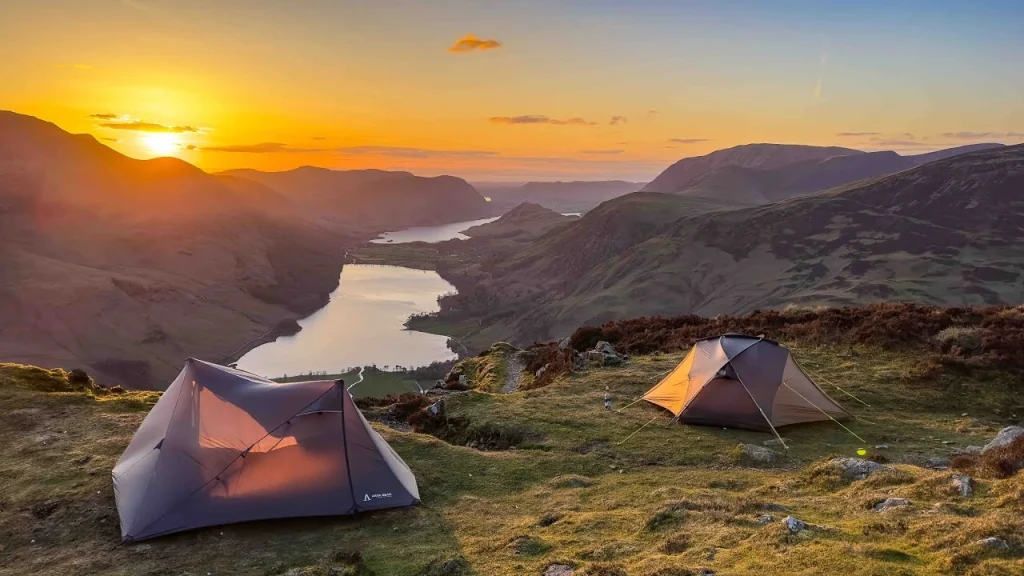
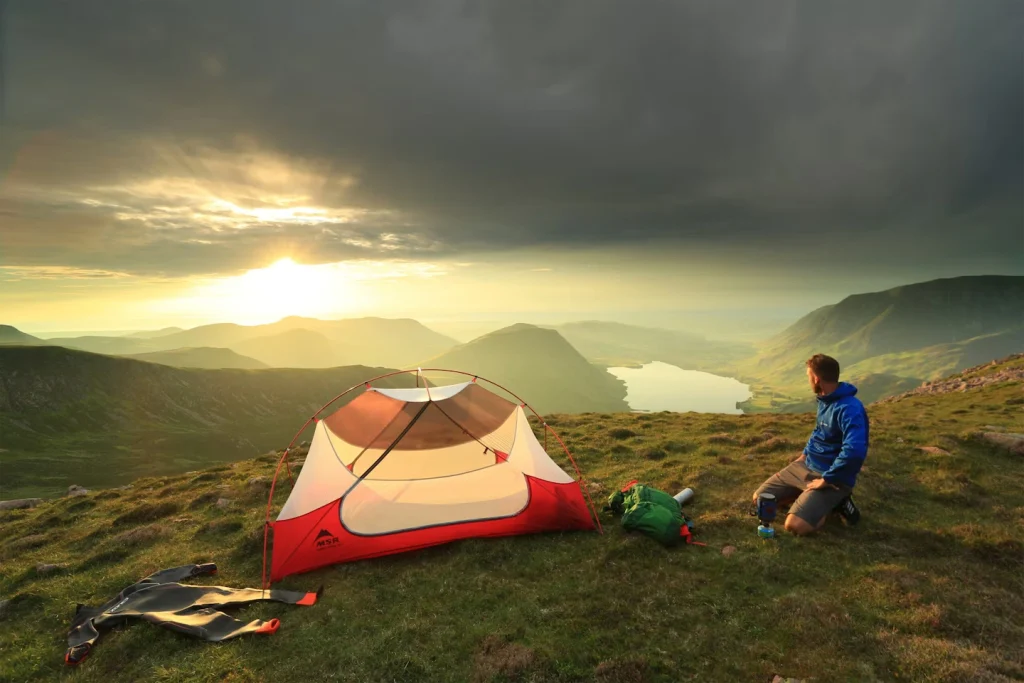
This situation creates a clear distinction between legality and acceptability. Experienced walkers follow an unwritten code: they camp high on the fells, arrive late, leave early, and avoid leaving visible traces. These actions do not grant formal permission; instead, they reflect negotiated behavior shaped over decades of informal practice.
Many also assume that wild camping automatically means remoteness. In the Lake District, however, true isolation remains rare. Even high ridges often sit within sight or walking distance of well-used paths. As a result, the experience depends less on escaping infrastructure and more on engaging with it selectively.
Environmental impact is another area where oversimplification occurs. A single campsite may appear insignificant, but repeated use leads to soil compaction, vegetation damage, and poor waste management. These cumulative effects can alter fragile upland ecosystems. For this reason, responsible wild camping depends on actively minimizing impact, not simply avoiding detection.
Deep Contextual Background
The Lake District’s current form is the result of glacial processes during the last Ice Age. U-shaped valleys, ribbon lakes, and rugged massifs define its topography. These geological features influence everything from drainage patterns to soil stability, directly affecting where camping is viable.
Historically, the region has been shaped by pastoral agriculture, particularly sheep farming. Dry stone walls, grazing rights, and managed landscapes complicate the notion of “wild” space. The land is neither untouched nor purely recreational; it is a working environment.
The rise of recreational walking in the 19th and 20th centuries introduced new pressures. Rail access and later автомобиль infrastructure expanded visitor numbers, leading to the establishment of the national park in 1951. Conservation efforts since then have focused on balancing access with preservation.
Wild camping emerged within this context as a low-impact extension of hillwalking. Unlike formal campsites, it relies on discretion and minimal infrastructure. Over time, increased popularity—amplified by digital route-sharing and social media—has strained this balance, prompting renewed scrutiny from landowners and park authorities.
Conceptual Frameworks and Mental Models
1. Tolerance Threshold Model
Wild camping persists where user behavior remains below a threshold of visibility and impact. Once exceeded, tolerance diminishes, often leading to restrictions or enforcement.
Limit: Thresholds are dynamic and influenced by external factors such as visitor numbers and environmental conditions.
2. Terrain Suitability Gradient
Not all landscapes within the park are equally suitable for camping. Factors include slope, drainage, wind exposure, and ecological sensitivity.
Limit: Suitable terrain may still be inappropriate due to visibility or land use.
3. Temporal Impact Model
Timing affects both environmental impact and social acceptability. Late arrival and early departure reduce visibility and disturbance.
Limit: Weather and daylight constraints can disrupt ideal timing.
4. Risk Compression Theory
In exposed environments, multiple risks—weather, navigation, fatigue—can converge rapidly, compressing decision time.
Limit: Anticipation reduces but does not eliminate compression effects.
5. Resource Independence Framework
Wild camping requires managing water, food, and shelter without external support.
Limit: Complete independence is rarely achieved; fallback options remain necessary.
Key Categories and Variations
Types of Wild Camping Approaches
| Category | Description | Advantages | Trade-offs |
|---|---|---|---|
| High Fell Camping | Above valley level, away from settlements | Low visibility | Exposure to weather |
| Valley Edge Camping | Near the lower slopes | Easier access | Higher visibility |
| Ridge Camping | On elevated ridgelines | Scenic positioning | Wind exposure |
| Tarn-Side Camping | Near small lakes | Water access | Environmental sensitivity |
| Fastpacking Camps | Minimalist overnight stops | Mobility | Limited comfort |
| Multi-Night Base Camps | Extended stays in one location | Stability | Increased impact risk |
Decision Logic
Choosing a category involves balancing:
- Environmental sensitivity
- Visibility and discretion
- Weather exposure
- Access to resources (especially water)
A high altitude location may reduce social impact but increase environmental and physical risks. Conversely, lower elevations offer shelter but increase the likelihood of conflict with land use.
Real-World Scenarios and Decision Points
High Ridge Camp Before a Weather Front
- Constraint: Incoming storm system
- Decision: Camp early or descend
- Failure Mode: Underestimating wind speed
- Second-Order Effect: Equipment failure leading to forced descent in poor visibility
Tarn-Side Camp in Peak Season
- Constraint: High foot traffic
- Decision: Stay or relocate
- Failure Mode: Choosing a visible site
- Second-Order Effect: Increased scrutiny leading to potential removal
Multi-Day Traverse with Limited Water Sources
- Constraint: Sparse water availability
- Decision: Carry extra weight or rely on streams
- Failure Mode: Misjudging water reliability
- Second-Order Effect: Dehydration affects navigation accuracy
Solo Camp in Dense Fog
- Constraint: Reduced visibility
- Decision: Continue or stop early
- Failure Mode: Navigational error
- Second-Order Effect: Camping in unsuitable terrain
Late Arrival Near Popular Summit
- Decision: Camp or descend further
- Failure Mode: Selecting exposed ground
- Second-Order Effect: Poor sleep impacts next-day performance
Planning, Cost, and Resource Dynamics
Cost Overview
| Category | Low Range | Mid Range | High Range |
|---|---|---|---|
| Equipment | Basic kit | Mid-tier gear | Technical ultralight |
| Transport | Public transit | Mixed travel | Private vehicle |
| Food | Simple provisions | Balanced nutrition | Specialized supplies |
| Contingency | Minimal | Moderate | Extensive |
| Total Estimate | Low | Moderate | High |
Indirect considerations include:
- Time spent planning routes
- Physical preparation
- Opportunity cost of weather delays
Variability is influenced by season, weather patterns, and personal equipment standards.
Tools, Strategies, and Support Systems
1. Topographic Mapping
Essential for understanding terrain and identifying viable camp locations.
2. Weather Forecasting Systems
Mountain-specific forecasts provide critical detail beyond general reports.
3. Lightweight Shelter Systems
Balancing durability with portability.
4. Water Filtration Methods
Reducing reliance on carried water.
5. Route Planning Software
Integrating elevation profiles and timing estimates.
6. Emergency Communication Tools
Limited but valuable in remote areas.
7. Layered Clothing Systems
Adaptable to rapid weather changes.
Risk Landscape and Failure Modes
Risk Categories
- Environmental: Weather shifts, terrain instability
- Operational: Equipment failure
- Physiological: Fatigue, dehydration
- Cognitive: Poor decision-making under stress
- Social: Conflict with landowners or authorities
Compounding Risk Example
Fatigue → Slower pace → Late camp setup → Poor site choice → Increased exposure
Governance, Maintenance, and Long-Term Adaptation
Wild camping practices must adapt to changing conditions.
Monitoring
- Daily weather reassessment
- Terrain condition evaluation
Adjustment Triggers
- Forecast deterioration
- Equipment issues
- Physical strain
Layered Checklist
- Pre-trip planning
- Daily operational review
- Post-trip evaluation
Measurement, Tracking, and Evaluation
Indicators
Leading:
- Weather trends
- Energy levels
Lagging:
- Route completion
- Equipment wear
Documentation Examples
- Route logs
- Weather observations
- Resource tracking
- Decision analysis notes
Common Misconceptions and Oversimplifications
- “Wild camping is fully legal.”
It exists in a tolerated but restricted space. - “Any location is suitable.”
Terrain and visibility matter significantly. - “Minimal gear is always better.”
Trade-offs exist between weight and safety. - “Impact is negligible.”
Cumulative effects are significant. - “Experience eliminates risk.”
It reduces but does not remove it.
Ethical and Contextual Considerations
- Leave No Trace principles
- Respect for land use and livestock
- Minimizing visual and ecological impact
The sustainability of the practice depends on collective adherence to these principles.
Conclusion
is defined less by freedom than by negotiation between individual intent and environmental, legal, and social constraints. It rewards preparation, restraint, and situational awareness while penalizing assumption and overconfidence. The landscape itself remains constant in its variability. Weather shifts, terrain challenges, and human pressures ensure that no approach remains universally effective. Adaptability becomes the central skill, not merely reacting to conditions, but anticipating their interaction. Over time, the practice reveals its structure. What appears informal is, in fact, governed by layered systems of tolerance, risk, and responsibility.