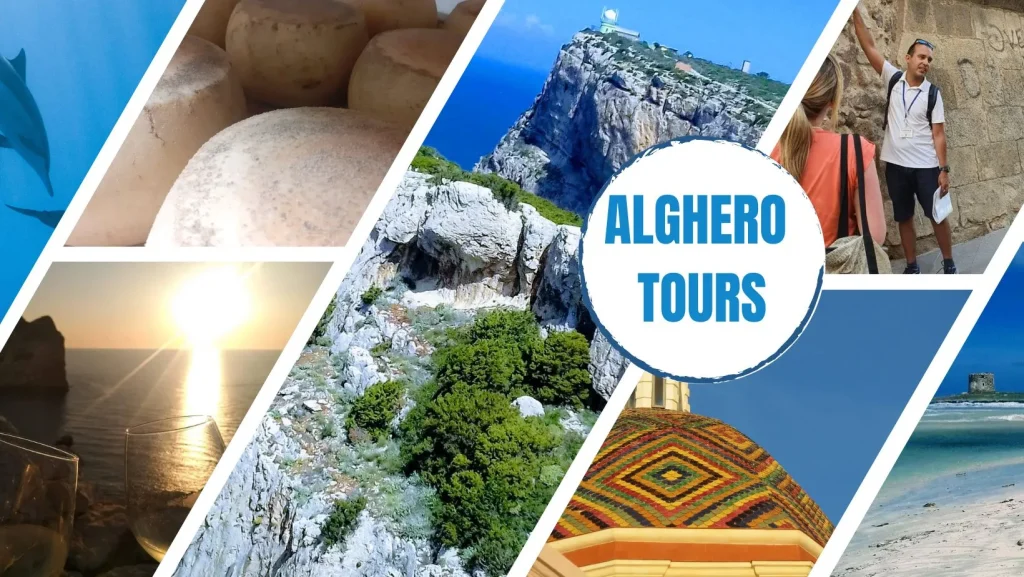
dirganews.com – On the northwestern edge of Sardinia, where limestone cliffs meet a restless Mediterranean, Alghero presents a distinct kind of travel proposition, one that resists simplification. It is not merely a coastal town with scenic beaches, nor solely a historical enclave marked by Catalan influence. For the solo traveler, it becomes something more layered: a terrain of shifting conditions, cultural overlaps, and logistical nuances that require both attentiveness and adaptability.
An Alghero solo adventure is often framed in overly romantic terms, sunsets over coral reefs, quiet cobblestone streets, and leisurely coastal drives. While those elements exist, they represent only a partial truth. The lived experience involves navigating transportation asymmetries, understanding seasonal volatility, managing exposure to natural elements, and interpreting a cultural rhythm that does not always align with standardized tourist expectations.
The deeper value of traveling alone in Alghero lies in how it compresses decision-making into immediate, personal responsibility. Without shared buffers or group dynamics, the traveler engages directly with uncertainty, whether that concerns coastal weather shifts, wildlife encounters, or the practicalities of moving between remote sites. This creates a context where planning is necessary but insufficient; situational awareness becomes equally critical.
What follows is not a promotional guide or a list of attractions. Instead, it is a comprehensive, systems-oriented examination of how to approach Alghero independently, accounting for environmental, cultural, logistical, and behavioral variables that shape the experience in real terms.
Understanding “Alghero solo adventure.”
At first glance, the phrase suggests independence in a scenic Mediterranean setting. However, its practical meaning expands across several dimensions: autonomy, environmental exposure, cultural navigation, and temporal unpredictability.
An Alghero solo adventure is not defined by isolation, but by unmediated interaction. Without companions, the traveler becomes fully accountable for interpreting local systems, transport schedules, regional etiquette, weather conditions, and spatial geography. This alters both risk and reward profiles.
Multiple Interpretations
- Recreational framing: Beach exploration, cycling, historical wandering
- Experiential framing: Cultural immersion, language exposure, slow travel
- Operational framing: Logistics management, route planning, safety protocols
- Reflective framing: Psychological engagement with solitude and autonomy
Each framing emphasizes different priorities. Misalignment between expectation and reality is a common source of friction.
Oversimplification Risks
A recurring issue is the assumption that Alghero functions like a typical European coastal destination. This leads to several blind spots:
- Underestimating transportation gaps outside peak season
- Misjudging distances between natural landmarks
- Ignoring weather volatility, especially along exposed coastlines
- Treating wildlife and terrain as passive rather than dynamic factors
These oversights do not necessarily lead to failure, but they compound quickly when traveling alone.
Deep Contextual Background
assets.wfcdn.com
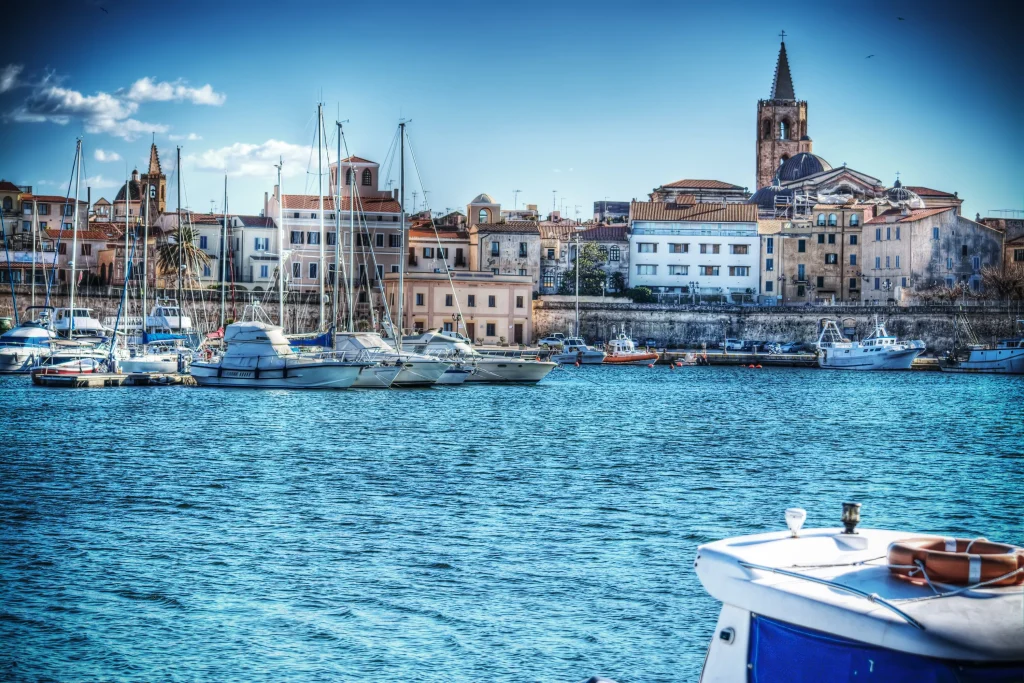
To understand the dynamics of solo travel in Alghero, it is necessary to situate the region within its broader historical and geographic context.
Historical Layering
Alghero’s identity is shaped by centuries of overlapping influences:
- Indigenous Sardinian roots
- Catalan governance, still visible in language and architecture
- Maritime trade networks across the Mediterranean
This layering produces a hybrid cultural environment. For a solo traveler, it means encountering subtle variations in communication styles, social norms, and daily rhythms.
Geographic Constraints
Unlike mainland urban centers, Alghero operates within the constraints of an island ecosystem:
- Limited transport redundancy
- Seasonal economic cycles tied to tourism
- Environmental protections that restrict access in certain areas
The surrounding region includes notable sites such as Neptune’s Grotto and Capo Caccia—both visually striking but logistically dependent on weather and timing.
Seasonal Variability
The experience of Alghero shifts dramatically across seasons:
- Summer: High density, extended services, elevated costs
- Shoulder seasons: Reduced crowds, partial service availability
- Winter: Minimal tourism infrastructure, heightened weather exposure
A solo traveler must account for these shifts not as background conditions, but as central variables influencing every decision.
Conceptual Frameworks and Mental Models
Understanding an Alghero solo journey benefits from structured thinking. Several frameworks help clarify decision-making under uncertainty.
1. Exposure vs Control
- Exposure: Degree of environmental and situational unpredictability
- Control: Ability to manage or mitigate those conditions
Solo travel increases exposure while reducing shared control mechanisms.
Limit: Overemphasis on control can lead to rigidity, reducing adaptability.
2. Temporal Flexibility Model
Evaluates how tightly a schedule is structured.
- High flexibility → adaptive but potentially inefficient
- Low flexibility → efficient but vulnerable to disruption
Limit: External constraints (e.g., transport schedules) can override flexibility.
3. Cognitive Load Allocation
Solo travel requires constant decision-making:
- Navigation
- Safety assessment
- Resource management
Balancing cognitive load is critical to avoid fatigue-induced errors.
4. Risk Gradient Mapping
Instead of binary safe/unsafe thinking, risks are viewed on a gradient:
- Environmental (weather, terrain)
- Social (interaction, isolation)
- Logistical (transport, timing)
Limit: Gradients shift rapidly, requiring continuous reassessment.
Key Categories and Variations
An Alghero solo experience can be segmented into distinct categories, each with unique trade-offs.
Categories Overview
| Category | Characteristics | Trade-offs |
|---|---|---|
| Coastal Exploration | Beaches, cliffs, marine environments | Weather dependency |
| Historical Immersion | Old town, architecture | Limited after-hours activity |
| Outdoor Adventure | Hiking, cycling | Physical risk, navigation complexity |
| Culinary Focus | Local cuisine, markets | Timing constraints |
| Minimalist Retreat | Slow pace, low activity | Potential isolation |
| Hybrid Approach | Mixed activities | Higher planning complexity |
Decision Logic
The choice between categories depends on three primary variables:
- Tolerance for uncertainty
- Desired activity level
- Seasonal context
A hybrid approach often appears attractive but introduces compounded complexity—particularly for solo travelers managing multiple variables simultaneously.
Real-World Scenarios and Decision Points
Coastal Cliff Navigation
A traveler plans to visit Capo Caccia independently.
Constraints:
- Wind conditions
- Limited transport schedules
- Physical descent via stair systems
Failure Modes:
- Underestimating return time
- Weather shiftare s reducing visibility
Second-order Effects:
- Missed transport leading to extended isolation
Off-Season Exploration
Travel occurs in late autumn.
Constraints:
- Reduced service availability
- Shorter daylight hours
Decision Points:
- Prioritize daylight-dependent activities
- Maintain buffer time for transport uncertainties
Wildlife Encounter
Exploring rural outskirts introduces encounters with local fauna.
Considerations:
- Stray animals
- Insects
- Marine life near rocky coasts
Failure Mode:
- Misinterpreting behavior as non-threatening
Urban-Natural Transition
Moving between Alghero’s historic center and the surrounding natural areas.
Challenge:
- Rapid shift from structured to unstructured environments
Risk:
- Overconfidence carried from urban familiarity into less predictable terrain
Planning, Cost, and Resource Dynamics
Costs in an Alghero solo context extend beyond direct expenses.
Cost Table (Range-Based)
| Category | Low Range | High Range | Variability Drivers |
|---|---|---|---|
| Accommodation | $50/night | $250+/night | Season, location |
| Transport | $5/day | $60/day | Rental vs public |
| Food | $20/day | $100/day | Dining choices |
| Activities | $0 | $80/day | Guided vs independent |
Indirect Costs
- Time lost due to inefficiencies
- Cognitive fatigue
- Opportunity cost of missed experiences
These are often more impactful than direct financial costs.
Tools, Strategies, and Support Systems
Key Tools
- Offline mapping systems
- Local transport schedules
- Weather monitoring platforms
- Emergency contact protocols
- Language translation tools
- Physical navigation backups (maps)
- Energy and hydration management
Limitations
No tool fully compensates for situational awareness. Overreliance on digital systems introduces vulnerability, particularly in low-connectivity zones.
Risk Landscape and Failure Modes
Risk Taxonomy
- Environmental: Weather, terrain
- Operational: Transport gaps
- Behavioral: Decision fatigue
- Social: Isolation or miscommunication
Compounding Risks
Small failures often cascade:
- Delayed transport → missed connections → extended exposure
- Fatigue → poor decisions → increased vulnerability
Governance, Maintenance, and Long-Term Adaptation
Solo travel requires ongoing adjustment.
Monitoring
- Daily review of plans vs actual outcomes
- Weather reassessment
- Resource tracking
Adjustment Triggers
- Significant weather change
- Unexpected delays
- Physical or cognitive fatigue
Layered Checklist
- Route verification
- Backup options
- Time buffers
- Safety considerations
Measurement, Tracking, and Evaluation
Indicators
- Leading indicators: Preparation quality, situational awareness
- Lagging indicators: Outcomes, delays, incidents
Documentation Examples
- Daily route logs
- Expense tracking sheets
- Incident reports (minor or major)
- Reflection notes on decision-making
Common Misconceptions and Oversimplifications
- “Alghero is easy to navigate.” → Navigation complexity increases outside the urban core.
- “Weather is predictable” → Coastal conditions shift rapidly
- “Solo travel equals freedom.→ It increases responsibility
- “Everything is walkable” → Distances are often underestimated
- “Off-season is simple. er” → It reduces support systems
- “Locals always speak English” → Communication gaps persist
- “Nature is passive.” → It requires active risk assessment
Ethical and Contextual Considerations
Solo travelers interact directly with local systems.
Considerations
- Respect for environmental protections
- Awareness of local cultural norms
- Minimizing ecological impact
These are not abstract concerns; they influence access, safety, and long-term sustainability of the destination.
Conclusion
An Alghero solo journey operates at the intersection of autonomy and constraint. It offers neither pure freedom nor inherent difficulty, but a dynamic system in which outcomes depend on how effectively a traveler interprets shifting variables.
The value of an Alghero solo adventure lies not in its surface appeal, but in its capacity to demand and refine judgment. Each decision, from route planning to risk assessment, becomes both immediate and instructive. Over time, the experience reveals itself less as a sequence of destinations and more as a structured engagement with complexity.
There is no fixed template for navigating Alghero alone. What persists instead is a set of evolving principles: attentiveness, adaptability, and an understanding that independence, in this context, is less about solitude and more about clarity under changing conditions.