dirganews.com – The intersection of Central Asia and Siberia is marked by a geological and cultural convergence of immense complexity, centered upon the Altai range. While the broader massif spans four nations, the southwestern segment located within East Kazakhstan represents a distinct ecological and ethnographic enclave. In 2026, as global travel trends shift toward “Extremity Tourism” and carbon-sequestering landscapes, this region has moved from a peripheral curiosity to a focal point for geographical study. The Kazakh Altai is not merely a mountain range; it is a high-altitude laboratory where tectonic activity, glacial recession, and nomadic heritage coalesce.
To perceive this landscape purely through the lens of recreation is to overlook its systemic importance. The region functions as a critical watershed for the Irtysh River, a primary artery for both Kazakhstan and Russia, and serves as a biological bridge between the Mongolian steppes and the Siberian taiga. This “Ecotone,” a transition area between two biological communities,s is home to a high concentration of endemic species and relics of the Pleistocene era. Understanding the region requires an analytical departure from traditional travel narratives, favoring instead a multi-disciplinary audit of its rugged terrain and historical depth.
The logistical and intellectual barriers to entry in the Kazakh Altai remain significant. This is not a landscape of curated paths and predictable infrastructure; it is a territory defined by “Continental Extremity.” The climate fluctuates with violent unpredictability, and the terrain demands a level of self-sufficiency that challenges the modern ethos of frictionless movement. Consequently, the value of an investigation into the Altai is found in its “Epistemic Rigor,” the ability to synthesize geological data, political history, and logistical realities into a coherent understanding of one of Earth’s last truly formidable frontiers.
Understanding “Altai Mountains Kazakhstan”
wallpapercave.com
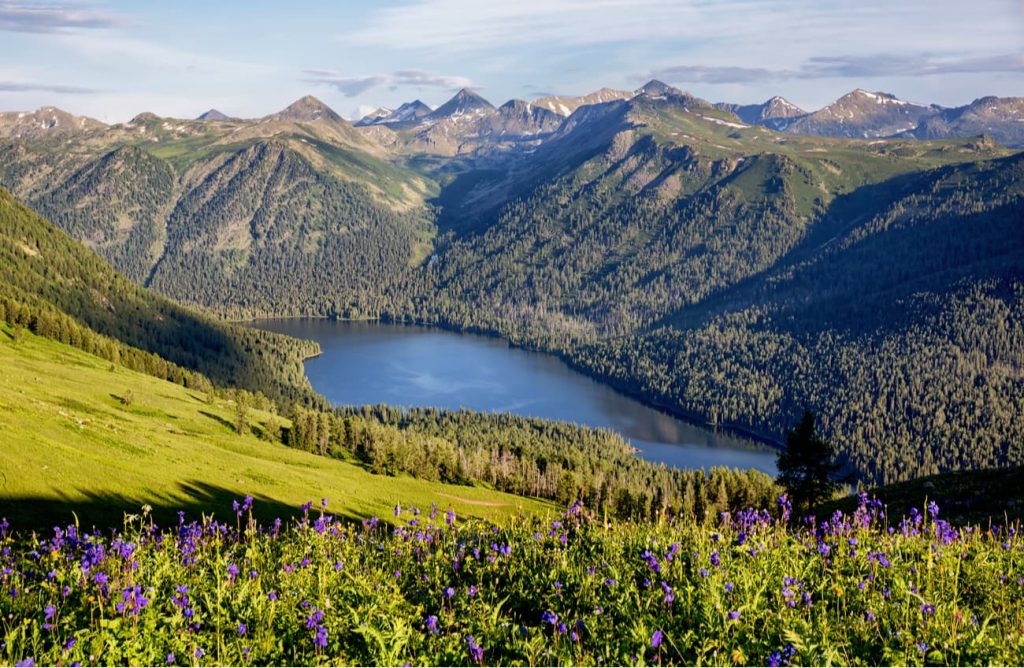
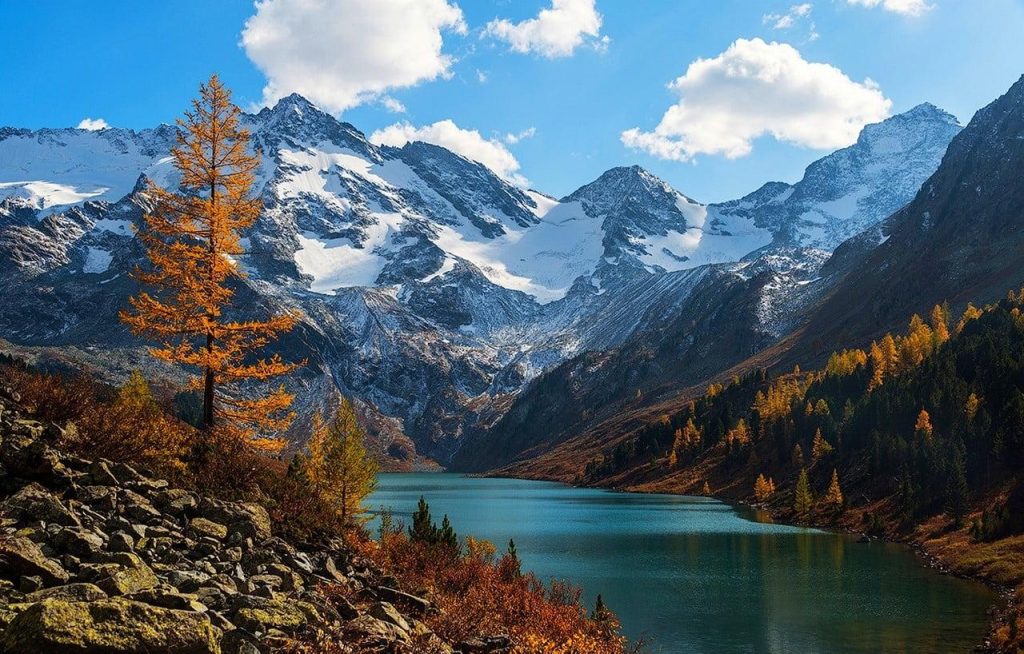
To properly engage with the Altai Mountains, Kazakhstan is to acknowledge a landscape that defies singular definition. While often categorized as a “nature reserve” or a “trekking destination,” it is more accurately described as a “Socio-Geological Massif.” It represents the collision of the Siberian platform and the Central Asian fold belt, a process that has yielded a topography of jagged peaks, deeply incised canyons, and high-altitude plateaus like the Ukok.
Multi-Perspective Explanation
From a Geomorphological Perspective, the Kazakh Altai is defined by the Alpine Orogeny,” characterized by sharp vertical relief and extensive glaciation. The Belukha Mountain massif, straddling the border, serves as the structural anchor of this system. Ethnographically, the region is a palimpsest of Turkic, Mongolic, and Slavic influences, where semi-nomadic cattle herding coexists with the remnants of Soviet-era mining and forestry. From a Biological Perspective, the Altai is a “Refugium”—a location that supports an isolated population of once widespread species, such as the snow leopard and the Altai argali.
Oversimplification Risks
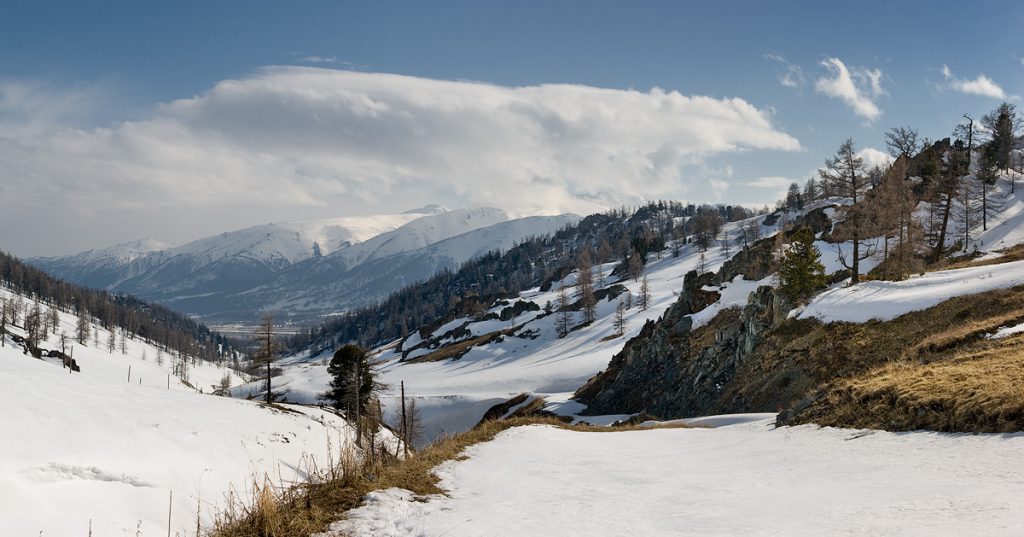
The primary risk in analyzing this region is “Generic Mountain Bias,” the assumption that the Altai is functionally similar to the Alps or the Rockies. This oversimplification ignores the “Hyper-Continentality” of the region. The temperature swings in the East Kazakhstan segment are among the most extreme on the planet, with winters that freeze the ground to extraordinary depths and summers that see intense, localized heat. Furthermore, the “Border-Zone Complexity” is often underestimated. Large swaths of the mountains are subject to strict military permit regimes due to their proximity to Russia and China, transforming a simple geography into a complex geopolitical puzzle.
Contextual Background: The Evolution of the Massif
The evolution of the Altai has been dictated by the “Central Asian Orogenic Belt.” Unlike the relatively young Himalayas, the Altai roots are Paleozoic, though they were “rejuvenated” by the far-reaching impact of the Indian-Eurasian collision. This history has left behind a rich tapestry of mineral deposits, including gold, silver, and rare earth metals, which have defined the human history of East Kazakhstan for millennia.
Historically, the region was the cradle of the Turkic peoples, a migration corridor for the Scythians, and a sanctuary for the “Old Believers, rs” Russian Orthodox dissenters who fled into the “Belovodye” (the land of white waters) to escape religious persecution. During the 20th century, the Soviet Union transformed the Katon-Karagay area into a strategic resource zone. Today, the transition from an extractive economy to a “Conservation Economy” is the defining systemic shift of the region, marked by the establishment of the Katon-Karagay National Park.
Conceptual Frameworks for High-Altitude Analysis
Professional geographers and expedition leaders utilize specific mental models to audit the viability and significance of the Altai terrain.
1. The “Zonal Vegetation” Model
This framework tracks the transition from the “Feather Grass Steppe” at the base, through the “Larch and Cedar Taiga,” to the “Alpine Tundra.” In the Altai, these zones are compressed vertically, meaning a traveler can experience four distinct biomes within a single day’s ascent.
2. The “Remote-Access” Decay
This model suggests that the logistical difficulty and cost of an intervention increase exponentially, not linearly, with distance from the regional center of Oskemen. This framework is essential for calculating fuel, food, and emergency extraction viability.
3. The “Cultural-Landscape” Framework
This recognizes that the mountains are not “wilderness” in the Western sense, but a “Humanized Environment.” Every valley has a name, a grazing history, and a set of local “Adat” (customary laws) regarding water and pasture management.
Key Categories of Terrain and Ecological Variations
Navigating the Altai requires matching the “Interventional Objective” to the specific topographical category.
| Category | Primary Feature | Significant Constraint | Ideal Use Case |
| Glacial Massifs | Belukha Peak; Berel Glacier. | High technical skill required. | Mountaineering; Glaciology. |
| Taiga Corridors | Bukhtarma Valley. | Dense forest; difficult fording. | Biodiversity study; Timber history. |
| High Plateaus | Ukok (Kazakh side). | High exposure; wind-scoured. | Archaeology: nomadic study. |
| Hydrological Basins | Lake Markakol. | Strict protected status (Zapovednik). | Ichthyology; endemic birding. |
| Mineralized Belts | Zyryanovsk Region. | Industrial scarring; pollution. | Economic geology; mining history. |
Detailed Real-World Scenarios and Logistical Logic
2.bp.blogspot.com
The “Snow Leopard” Monitoring Expedition
A team seeks to place camera traps in the Sarymsakty Range.
-
Decision Logic: Selection of “Horse-Back Logistics” over motorized vehicles.
-
Analysis: The terrain is too broken for ATVs, and the sound profile of engines would displace the target species.
-
Outcome: Horses provide the necessary “Tactical Stealth” and ability to cross high-altitude scree slopes that would be impassable to vehicles.
The “Markakol” Hydrological Audit
An analysis of the effects of siltation on the endemic Lenok fish.
-
Decision Point: Winter vs. Summer access.
-
Outcome: The team chooses Winter. The frozen surface of Lake Markakol allows for “Grid-Based Drilling” and core sampling that is more precise than boat-based sampling in the wind-whipped summer months.
Planning, Cost, and Resource Dynamics
The “Economic Floor” of an Altai expedition is determined by the “Permit Architecture” and the scarcity of high-octane fuel and specialized guides.
Altai Expedition Cost Tiers (2026 Estimates)
| Tier Level | Duration | Cost Range (USD) | Primary Resource |
| Standard Trekking | 10 Days | $1,500 – $2,500 | Local guide; Horses; Tents. |
| Technical Ascent | 14 Days | $4,000 – $7,000 | IFMGA Guide; Border Permits. |
| Scientific/Research | 21 Days | $10,000+ | Specialized 4WD; Satellite Comms. |
| Village Stay/Cultural | 7 Days | $800 – $1,200 | Guest houses; Local transport. |
Tools, Strategies, and Support Systems for Expedition
mrsdaakustudio.com
A rigorous Altai strategy requires a “Redundant Stack” of equipment and survival logic:
-
Topographical Maps (Soviet 1:50k): While digital GPS is standard, the historical Soviet military maps remain the gold standard for identifying hidden springs and forgotten shepherds’ paths.
-
Satellite Communication (Starlink/Iridium): Terrestrial cellular signals disappear within 20 kilometers of the Oskemen-Ust-Kamenogorsk corridor.
-
High-Altitude Horse Management: The Altai horse is a specific breed adapted to thin air and steep slopes; understanding their “Metabolic Limits” is critical for load planning.
-
Permit Management (The “Border Zone”): Processing the “Propusk” for Katon-Karagay requires a 30-to-60-day lead time with the Ministry of Internal Affairs.
-
Multi-Layered Thermal Management: Utilizing “Vapor Barrier” liners for footwear to prevent frostbite in -30°C conditions.
-
Off-Road Recovery Gear: In the “Rachmanov Springs” area, “Winching Capacity” is more important than engine horsepower.
Risk Landscape and Failure Modes
The “Taxonomy of Altai Risk” includes:
-
The “Isolation Compounding” Effect: A minor injury that would be trivial in Europe becomes life-threatening due to the 48-to-72-hour evacuation window.
-
The “Hydrological Trap”: River levels in the Altai can rise by several feet in hours due to “Glacial Melt” or mountain storms, rendering a return path impossible.
-
The “Tick-Borne Encephalitis” (TBE) Hazard: The Altai taiga has one of the highest concentrations of TBE-carrying ticks in Eurasia; immunization is a non-negotiable prerequisite.
-
The “Fuel Degradation” Failure: Low-quality fuel at remote outposts can lead to engine “Knocking” and total vehicle failure in high-altitude passes.
Governance, Conservation, and Long-Term Adaptation
The Kazakh Altai is currently governed by a “Layered Protection Model.” The Katon-Karagay National Park serves as the administrative core, but its efficacy depends on “Cross-Border Cooperation” with Russia’s Katunsky Zapovednik.
Conservation in 2026 focuses on “Climate-Resilient Corridors.” As glaciers melt, the “Isotherm”—the line of constant temperature—is moving upward, forcing species into smaller, higher pockets of habitat. Adaptive governance requires “Dynamic Buffer Zones” where grazing is restricted during critical breeding seasons. A long-term adaptation checklist includes:
-
Is the “Carbon Credit” potential of the taiga being audited?
-
Does the “Ecotourism Masterplan” account for “Waste Sequestration”?
-
Is the “Traditional Knowledge” of the local Maral (deer) farmers being integrated into management?
Measurement and Evaluation of Expedition Success
How do you measure the “ROI of Remote Exploration”?
-
Leading Indicators: “Biological Encounter” frequency; “Success Rate” of high-pass crossings; “Fuel-to-Distance” efficiency.
-
Qualitative Signals: “Local Engagement” (the willingness of shepherds to share data); “Environmental Impact” (the absence of physical or chemical footprints).
-
Documentation Examples: The “Geo-Chronicl,e” is a daily log cross-referencing GPS coordinates with soil moisture, wind speed, and cultural observations.
Common Misconceptions and Oversimplifications
-
“It’s Just Like the Russian Altai”: False. The Kazakh side is significantly more arid and has a different political and administrative structure.
-
“July is Always Warm”: False. High-altitude snowstorms in July are a regular occurrence in the Altai.
-
“The Mountains are Unpopulated”: False. There is a “Secret Geography” of seasonal camps and heritage sites invisible to the casual observer.
-
“Infrastructure is Improving Rapidly”: False. Outside of the main Berel-Katon corridor, infrastructure is often “Regressing” as Soviet-era bridges fail.
-
“English is Widely Spoken”: False. Kazakh and Russian remain the absolute “Lingua Franca” for all logistics.
Conclusion
The Altai Mountains of Kazakhstan represent a final bastion of “Geographical Sovereignty.” To engage with this landscape is to accept a contract of humility, where the dictates of the mountain override the schedules of the traveler. By approaching the region with an analytical and editorial mind valuing depth over speed and nuance over summary, the observer ensures that the Altai is not just visited, but understood. Success in 2026 is found in the “Systemic Literacy” that allows one to read the rocks, the rivers, and the cultural shifts of this ancient, enduring massif.