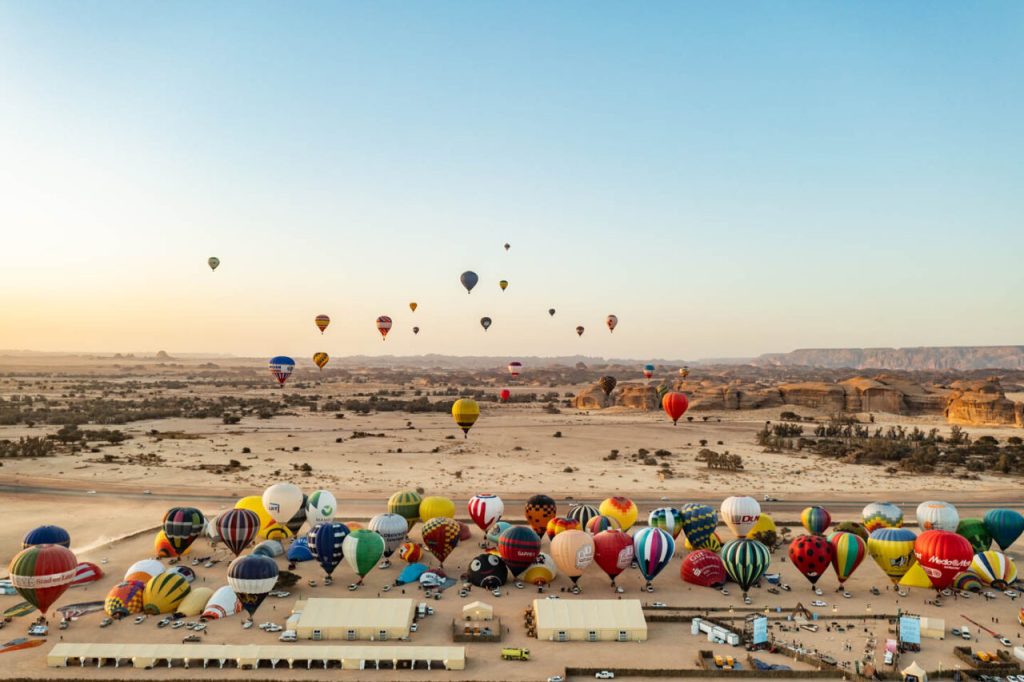
The geological theater of North-West Saudi Arabia, centered on the ancient oasis of AlUla, represents one of the most significant shifts in global high-end tourism in the 21st century. Engaging in a Desert Adventure in AlUla is no longer a matter of simple transit across a barren landscape; it has become a highly structured immersion into a 200,000-year-old human archive. The region, covering more than 22,000 square kilometers of sandstone canyons and volcanic plateaus, functions as a living laboratory where Nabataean engineering, Dadanite script, and modern land art intersect under a sky of absolute clarity.
The complexity of this destination arises from its dual identity. On one hand, AlUla is a fragile archaeological preserve, home to Hegra, Saudi Arabia’s first UNESCO World Heritage Site. On the other hand, it is a frontier for “light-touch” adventure tourism, where the thrill of a 120 km/h zipline or a multi-day trail run is balanced against strict conservation protocols. Navigating this environment requires an analytical understanding of the “Journey Through Time” masterplan, which dictates how visitors interact with five distinct heritage districts.
To approach AlUla as a mere traveler is to miss the systemic depth of the landscape. Success in this desert environment is predicated on a granular grasp of seasonal dynamics where winter temperatures can drop to 7°C (45°F) while summer peaks exceed 40°C (104°F) and the logistical intricacies of a tourism model that prioritizes pre-booked, guided access over spontaneous exploration. This article deconstructs the AlUla adventure into its constituent parts: the historical weight of the Incense Road, the mechanical realities of desert navigation, and the ethical imperatives of preserving a landscape that has served as a global crossroads for millennia.
Understanding “Desert Adventure in AlUla”

assets.cntraveller.in
The term Desert Adventure in AlUla is frequently simplified into a catalog of recreational activities dune bashing, hiking, or stargazing. However, an editorial perspective reveals that the “adventure” is actually a process of decoding a multi-layered landscape. It is an intellectual and physical engagement with a site that served as the capital of the Dadan and Lihyan kingdoms before becoming the southern outpost of the Nabataean Empire. The oversimplification risk here is high: treating AlUla like a standard desert resort ignores the reality that every canyon floor and rock face potentially contains unrecorded petroglyphs or inscriptions.
A critical misunderstanding involves the accessibility of the terrain. Unlike the open dunes of the Empty Quarter, AlUla’s topography is dominated by “Wadis” (valleys) and “Harrats” (volcanic fields). This creates a fragmented geography where movement is restricted by sandstone monoliths. Consequently, an “adventure” in this context is as much about the navigation of these natural corridors as it is about the activities performed within them. The Royal Commission for AlUla (RCU) has implemented a “controlled access” model, meaning that the best adventures are those that align with the staggered flow of the five heritage districts, from the Old Town to the Nabataean Horizon.
Furthermore, the “adventure” must be viewed through the lens of modern land art. Projects like Desert X AlUla have integrated contemporary sculpture directly into the desert floor, turning a physical hike into a curated cultural experience. To understand the best options for exploration, one must balance the raw adrenaline of the terrain with the quiet, reflective demands of the “Space Without Measure” theme that often governs the region’s artistic seasonal events.
Deep Contextual Background: The Systemic Evolution of AlUla
AlUla’s significance is rooted in its role as a hydro-geological anomaly. For thousands of years, the underground aquifers of the AlUla Valley allowed for a sedentary civilization in the midst of the unforgiving Hijaz desert. This water security made it a vital node on the Incense Road, the ancient network that carried frankincense and myrrh from Southern Arabia to the Mediterranean.
The historical evolution of AlUla can be divided into four major systemic phases:
- The Dadanite and Lihyanite Eras (9th Century BCE – 1st Century BCE): A period of sophisticated urban planning and the creation of “open-air libraries” like Jabal Ikmah.
- The Nabataean Hegemony: The expansion from Petra into Hegra, resulting in 111 monumental tombs carved into the sandstone.
- The Islamic and Ottoman Eras: AlUla’s transition into a key stop on the Syrian pilgrimage route (Darb al-Hajj), evidenced by the mudbrick architecture of the Old Town and the Hejaz Railway.
- The Modern Rejuvenation (Post-2018): The transformation into a global tourism destination under the Saudi Vision 2030, emphasizing sustainable development and archaeological research.
Conceptual Frameworks for High-Desert Exploration
To maximize a Desert Adventure in AlUla, explorers should utilize specific mental models to evaluate their environment and activity choices.
1. The Heritage-to-Adrenaline Ratio
Every activity in AlUla exists on a spectrum. A visit to Hegra is high heritage, low-adrenaline. A 150-meter zipline across the Ashar Valley is high-adrenaline, low-heritage. The “definitive” experience is found in the middle: an Art Hike through the canyons where geological history and human creativity are explored at a strenuous physical pace.
2. The Diurnal Thermal Shift
In a desert environment, the most critical resource is time, specifically the “thermal window.” Adventurers must apply a framework of activity-splitting: high-exertion tasks (rock climbing, trail running) must occur in the “Blue Hour” or early morning, while lower-exertion tasks (stargazing, museum visits) are reserved for the night or high-noon “indoor” periods.
3. The “Light-Touch” Footprint Model
AlUla operates on a “leave no trace” mandate. This framework dictates that the quality of an adventure is measured not by the depth of the tire tracks left in the sand, but by the lack of impact on the fragile sandstone surfaces. This has led to the prioritization of electric shuttles and designated trail systems over unrestricted off-roading.
Key Adventure Categories and Operational Trade-offs
Identifying the optimal Desert Adventure in AlUla requires a categorization based on technical demand and sensory output.
| Category | Primary Activity | Operational Trade-off | Ideal Scenario |
| Aerial Discovery | Hot Air Balloon / Helicopter | High cost; weather-dependent | Sunrise overview of Hegra |
| Vertical Adrenaline | Via Ferrata / Giant Swing | Physical exertion; height sensitivity | Testing limits in sandstone canyons |
| Historical Trekking | Oasis Trail / Dadan Guided Walk | Lower pace; high crowd density | Deep cultural immersion |
| Mechanical Safari | Dune Buggy / 4×4 Off-road | High noise; restricted zones | Exploring remote rock formations |
| Celestial Observation | Gharameel Stargazing | Late night; requires clear skies | Astrophotography enthusiasts |
Decision Logic: Seasonal Filtering
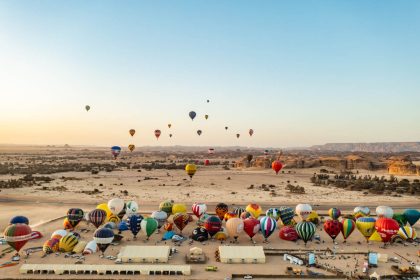
The logic of selection changes with the calendar. During the “Winter at Tantora” festival (December–February), the region is at peak capacity; adventures must be booked months in advance. Conversely, late spring (April) offers the “AlUla Skies” festival, where aerial adventures take precedence despite rising midday temperatures.
Detailed Real-World Scenarios
The High-Endurance Trail Race
-
Constraint: 50km or 100km distance in January 2026.
-
Decision Point: Gear selection for a 20°C temperature swing between start and finish.
-
Failure Mode: Dehydration due to the deceptive “dry cold” of the early morning, where runners do not feel the need to drink despite high exertion.
-
Second-order Effect: The mental fatigue of navigating ever-changing terrain—from soft sand to sharp volcanic rock.
The Luxury Expedition in Ashar Valley
-
Constraint: 48 hours, staying at the Banyan Tree or Habitas.
-
Decision Point: Balancing the “Desert Mirror” (Maraya) experience with a private Hegra tour.
-
Constraint: Use of the complementary shuttle system to avoid the logistical burden of private car hire in restricted zones.
-
Success Metric: Capturing the “Golden Hour” at Elephant Rock without the midday crowd friction.
Planning, Cost, and Resource Dynamics
A Desert Adventure in AlUla is an investment in logistics. The “Total Cost of Trip” is heavily weighted toward guided access and specialized transport.
2026 Price Estimates (SAR)
| Item | Standard Entry | Guided / Private | Notes |
| Hegra Tour | 95 – 150 | 1,000+ | Includes bus/private car |
| Adventure Hub (Zipline) | 180 – 250 | N/A | Booking 48h in advance |
| AlUla Trail Race | 170 (10km) | 430 (100km) | Includes race kit |
| Desert X Art Walk | 50 (General) | 1,000 (Private) | Seasonal availability |
| Stargazing (Gharameel) | 350 – 450 | N/A | Includes dinner/transport |
Note: 1 USD is approximately 3.75 SAR. VAT of 15% is typically included in quoted prices.
Tools, Strategies, and Support Systems
The success of a desert expedition relies on a suite of “invisible” support systems:
-
The AlUla Moments App: The primary gateway for booking all regulated heritage and adventure slots.
-
The International Dark Sky Certification: A governance tool used to restrict light pollution in areas like Gharameel, ensuring world-class stargazing.
-
Certified Rawi (Guides): Local storytellers who provide the necessary cultural context that digital apps cannot replicate.
-
Electric Shuttle Network: The logistical backbone that connects the “Winter Park” hub to the heritage districts, reducing the carbon footprint of individual tourism.
Risk Landscape and Failure Modes
Exploring an arid-zone archive carries inherent risks that must be managed through proactive governance.
-
Thermal Exhaustion: The most common failure mode. The desert UV rays are intense even in the “cool” winter months.
-
Archaeological Damage: Accidentally touching or climbing on unvetted sandstone walls can lead to the destruction of ancient inscriptions and significant legal penalties.
-
Flash Flooding: Rare but catastrophic. Narrow canyons (Wadis) can fill with water in minutes during a desert storm. Always check the “Wadi status” before deep trekking.
-
Navigation Attrition: Relying on GPS in deep canyons often fails due to signal bounce. Physical maps and local guides remain the “gold standard” for safety.
Governance, Maintenance, and Long-Term Adaptation

www.telegraph.co.uk
AlUla is governed by the Royal Commission for AlUla (RCU), which operates under the “Journey Through Time” masterplan. This plan is not static; it involves a continuous review of visitor numbers and ecological impact.
The Adventure Sustainability Checklist
-
Zoning Compliance: Ensuring activities occur only in designated areas (e.g., Sharaan Nature Reserve for safaris).
-
Wildlife Reintroduction: Monitoring the impact of hikers on newly reintroduced species like the Arabian Leopard and Idmi Gazelle.
-
Water Management: The transition toward gray-water recycling and solar-powered hospitality units in the Ashar Valley.
Measurement, Tracking, and Evaluation
How do we measure the success of an AlUla adventure?
-
Leading Indicators: The responsiveness of the booking system; the clarity of safety briefings at the Adventure Hub.
-
Lagging Indicators: The “Archaeological Integrity Score” (monitored by UNESCO); the diversity of species sightings in the nature reserves.
-
Qualitative Feedback: The depth of understanding a visitor gains regarding the Nabataean civilization versus their initial preconceptions.
Common Misconceptions and Oversimplifications
-
Myth: “AlUla is just like Petra.”
-
Reality: While both have Nabataean tombs, AlUla’s landscape is more expansive and includes distinct Dadanite and Lihyanite layers that Petra lacks.
-
-
Myth: “You can drive yourself everywhere.”
-
Reality: Most heritage sites and high-adventure zones require a permit or a shuttle. Unrestricted driving is highly limited to protect the desert floor.
-
-
Myth: “It’s always hot.”
-
Reality: Winter nights can be freezing. Packing for an AlUla adventure requires a “layered” strategy.
-
Conclusion: Synthesis and Adaptability
A Desert Adventure in AlUla is a paradox of modern travel: it offers extreme adrenaline in a landscape that demands extreme stillness. To succeed here, one must be both a thrill-seeker and an amateur archaeologist. The region’s transition from a forgotten desert outpost to a global cultural destination serves as a case study in how “light-touch” tourism can protect human heritage while providing a platform for contemporary creativity. As the masterplan unfolds toward 2035, the defining characteristic of AlUla will remain its adaptability, its ability to host a 100km ultra-marathon one day and a silent, candlelit stargazing session the next, all while the sandstone tombs of Hegra look on, unchanged by the passage of time.