dirganews.com – Japan’s physical geography imposes a kind of quiet discipline on anyone attempting to move through it beyond urban space. The country’s interior is not arranged for ease. Mountain ranges divide regions into narrow corridors, coastlines fracture into peninsulas and inlets, and weather patterns, particularly in transitional seasons, disrupt even well-structured plans. What appears, from afar, to be a compact and orderly nation reveals a far more complex terrain when approached through its less mediated environments.
Wilderness, in this context, does not signify emptiness. It refers instead to a thinning of control. Roads narrow, signage becomes less reliable, and the assumptions that underpin urban travel predictability, redundancy, and immediacy gradually lose their force. Yet these areas are rarely devoid of human influence. Shrines, forestry roads, seasonal shelters, and long-standing paths remain embedded within them, producing a landscape that is neither fully wild nor fully managed.
This duality complicates expectations. Travelers often arrive with frameworks shaped by other countries, either expecting pristine isolation or, conversely, assuming seamless infrastructure. Japan resists both interpretations. Access exists, but it is conditional. Trails are maintained, but not uniformly. Environmental hazards are mitigated, but not neutralized.
To understand Japanese wilderness travel at a meaningful level requires moving beyond surface impressions. It involves recognizing how terrain, climate, infrastructure, and cultural practice intersect and how those intersections produce both opportunity and constraint. The following analysis treats the subject not as a collection of destinations, but as a system that can be studied, interpreted, and navigated with deliberate awareness.
Japan Wilderness Travel
i1.wp.com
The phrase “Japan wilderness travel” is often used casually, yet it conceals a wide range of conditions that differ significantly in structure, risk, and experience. At one end of the spectrum are regulated alpine routes in the Japanese Alps, where marked trails, seasonal huts, and established transport systems create a controlled environment. At the other end are remote zones such as the Shiretoko Peninsula, where access is limited, wildlife presence is active, and decision-making shifts toward self-reliance.
The primary misunderstanding lies in assuming that these experiences share a common operational logic. They do not. A traveler accustomed to hut-supported trekking may encounter significant difficulty when transitioning to areas with minimal infrastructure. Conversely, those expecting complete isolation may underestimate the extent to which human systems remain present even in remote terrain.
Another oversimplification concerns the role of infrastructure. It is tempting to view Japan’s extensive transport network and trail maintenance as a safety net. In reality, these systems redistribute complexity rather than eliminating it. A bus route into a mountainous area creates access but also dependency on schedules, seasonal operation, and weather conditions that can interrupt service without notice.
The phrase itself, then, is less a category than a shorthand for a set of interacting variables: access, risk, infrastructure, and environmental volatility. Understanding these variables and how they shift across regions and seasons is essential to interpreting what Japanese wilderness travel actually entails.
Deep Contextual Background
Japan’s wilderness landscapes are the product of long-term interaction between human settlement patterns and environmental constraints. With approximately seventy percent of the country covered by mountains, arable land has historically been limited. This concentration of population in coastal plains left interior regions less densely inhabited, though not untouched.
Forestry practices, in particular, shaped large portions of the landscape. Managed forests supplied timber and fuel for centuries, creating ecosystems that appear natural but are, in many cases, the result of sustained human intervention. Over time, some of these areas have reverted to more complex ecological states, blurring the distinction between managed and wild environments.
The establishment of national parks in the early twentieth century formalized conservation efforts. Areas such as Fuji-Hakone-Izu National Park were designated not as exclusion zones, but as regulated landscapes where tourism and preservation coexist. This model differs from stricter wilderness preservation frameworks found elsewhere.
Post-war infrastructure development extended access deeper into mountainous and coastal regions. Rail lines, buses, and roads now reach areas that were once accessible only on foot. However, this expansion did not eliminate environmental constraints. Snowfall, landslides, and seismic activity continue to disrupt access, reinforcing the conditional nature of movement through these areas.
The result is a landscape shaped by negotiation rather than dominance. Human systems enable access, but they do not fully control the environment. This tension defines the operational reality of wilderness travel in Japan.
Conceptual Frameworks and Mental Models
Conditional Accessibility Model
Access to remote areas is rarely fixed. Seasonal shifts, weather events, and infrastructure maintenance schedules alter availability. A route that is straightforward in late summer may be inaccessible in early spring.
Limit: It does not capture sudden, short-term disruptions such as typhoons or landslides.
Infrastructure Dependency Gradient
Travel in these environments often relies on external systems—transport networks, shelters, and information sources. The degree of dependency varies by region and route.
Limit: Overemphasis can obscure the need for independent navigation and contingency planning.
Environmental Volatility Lens
Japan’s geological and climatic conditions introduce variability that is not always linear. Volcanic activity, heavy rainfall, and rapid weather changes create conditions that can shift within hours.
Limit: It highlights risk but does not provide precise thresholds for action.
Cultural Landscape Integration
Many wilderness areas incorporate historical and cultural elements, from pilgrimage routes to isolated shrines. These features influence how spaces are used and maintained.
Limit: The relevance of cultural context varies depending on the route and the traveler’s objectives.
Key Categories and Variations
Alpine Environments
Example: Mount Tate
Short seasonal windows, exposure to rapid weather shifts, and structured trail systems.
Volcanic Landscapes
Example: Mount Aso
Dynamic terrain, restricted zones, and ongoing geological monitoring.
Subtropical Forests
Example: Yakushima
Dense vegetation, high humidity, and navigation complexity.
Northern Wilderness
Example: Hokkaido
Lower population density, significant wildlife presence, and harsh winters.
Coastal Wilderness
Example: Noto Peninsula
Exposure to maritime weather, fragmented terrain.
Pilgrimage Routes
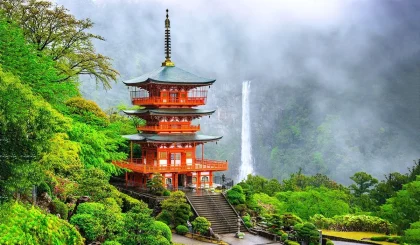
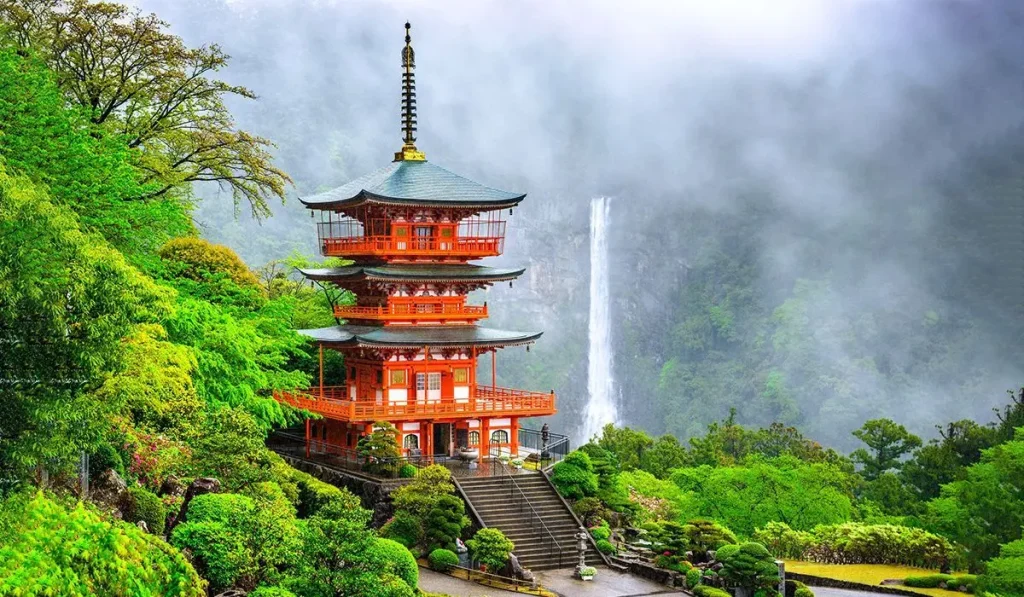
Example: Kumano Kodo
Integrated infrastructure, cultural overlays, moderate accessibility.
Comparison Table
| Category | Accessibility | Infrastructure | Risk Level | Seasonal Sensitivity |
|---|---|---|---|---|
| Alpine | Moderate | High | Medium | High |
| Volcanic | Variable | Moderate | High | Moderate |
| Subtropical Forest | Low | Low | Medium | Moderate |
| Northern | Low | Moderate | High | High |
| Coastal | Moderate | Moderate | Medium | Moderate |
| Pilgrimage | High | High | Low | Low |
Decision Logic
Selecting a category involves aligning three variables: desired remoteness, tolerance for uncertainty, and logistical capacity. Increasing one often constrains the others. A highly remote environment typically reduces infrastructure support and increases exposure to environmental risk.
Real-World Scenarios
Alpine Traverse
A multi-day route through the Northern Japan Alps depends on weather stability and hut availability. Failure to secure accommodation introduces exposure risks.
Remote Peninsula Travel
Exploration of the Shiretoko Peninsula requires awareness of wildlife patterns. Timing and group size influence safety.
Volcanic Area Restrictions
At Mount Sakurajima, access can be restricted without notice. Plans must incorporate alternative routes.
Dense Forest Navigation
In Yakushima, heavy rainfall reduces visibility. Navigation depends on terrain awareness rather than trail markers alone.
Winter Isolation
Remote regions of Hokkaido experience transport disruption due to snow. Exit strategies become central to planning.
Planning, Cost, and Resource Dynamics
| Category | Estimated Range (USD) |
|---|---|
| Transportation | $150–$600 |
| Accommodation | $70–$350 per night |
| Gear | $300–$1500 |
| Permits | $0–$150 |
| Contingency | $100–$500 |
Costs vary by season, region, and reliance on infrastructure. Indirect costs, such as time, preparation, and flexibility, often exceed direct financial expenditure.
Tools, Strategies, and Support Systems
wallpaperbat.com
- Topographic mapping
- Weather monitoring
- Seasonal route data
- Hut reservation systems
- Transport coordination
- Emergency communication devices
- Offline navigation tools
Each tool reduces uncertainty but introduces dependency. Redundancy is essential.
Risk Landscape and Failure Modes
Risk is cumulative rather than singular. Environmental conditions, logistical constraints, and human factors interact in ways that amplify small errors.
Primary categories include:
- Environmental
- Biological
- Logistical
- Human
Failures often emerge gradually, through misaligned assumptions and delayed responses.
Governance and Long-Term Adaptation
Monitoring
- Weather patterns
- Route conditions
- Personal capacity
Adjustment Triggers
- Environmental change
- Infrastructure disruption
- Resource depletion
Checklist
- Route verified
- Exit options defined
- Communication plan established
- Redundancy ensured
Measurement, Tracking, and Evaluation
Indicators
- Leading: forecasts, time margins
- Lagging: delays, shortages
Documentation
- Route logs
- Weather records
- Gear assessments
- Decision journals
Common Misconceptions and Oversimplifications
- Wilderness equals isolation
- Trails are always marked
- Infrastructure guarantees safety
- Conditions are predictable
- Wildlife is negligible
- Navigation is simple
- Access implies readiness
Each misconception introduces avoidable risk.
Ethical and Contextual Considerations
Wilderness areas intersect with ecosystems, communities, and cultural sites. Responsible engagement requires awareness of these relationships. Environmental impact accumulates over time, and behavior within these spaces contributes to long-term sustainability or degradation.
Conclusion
Japan wilderness travel is defined less by distance from civilization than by the shifting balance between control and exposure. Infrastructure, culture, and environment interact in ways that resist simplification. Effective navigation of this landscape depends on recognizing those interactions and adapting accordingly. The terrain itself remains dynamically shaped by weather, geology, and human management. Engaging with it demands a mindset oriented toward observation, adjustment, and measured decision-making rather than fixed expectations.