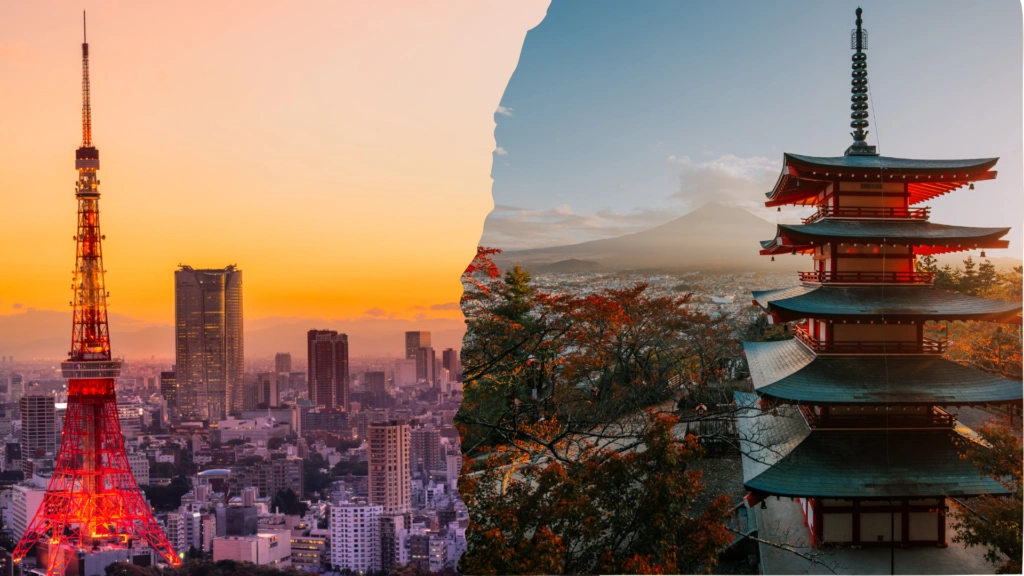
Japan is often presented through a compact set of familiar images: vermilion shrine gates, neon intersections, bullet trains, cherry blossoms, mountain silhouettes, wooden temples, and carefully arranged gardens. Those images are recognizable because they contain real elements of the country. The difficulty begins when they are treated as a complete explanation.
A serious approach to Japan’s major attractions requires more than listing popular landmarks. Every destination sits within a larger system of history, religion, transportation, urban development, environmental pressure, seasonal change, and contemporary tourism. A temple is not merely an old building. A mountain is not only a viewpoint. A memorial is not simply a photography stop. Each place has accumulated meanings that change according to who is visiting, when they arrive, how long they stay, and what they understand before entering.
This guide to 8 Japan Tourist Attractions therefore takes a broader view. It examines eight places that help explain distinct dimensions of Japan: imperial history, religious practice, modern urbanism, sacred geography, wartime memory, landscape design, regional identity, and the management of globally recognized heritage. The selections are not presented as the only attractions worth seeing. Japan contains thousands of significant sites, many of which are quieter, less commercial, or more locally rooted. These eight were chosen because together they create a useful national framework.
Understanding “8 Japan Tourist Attractions.”
core.windows.net
The phrase 8 Japan Tourist Attractions may sound like a simple promise: eight famous places, organized into a practical list. That interpretation is useful, but incomplete. The number eight is an editorial boundary, not a claim that Japan can be reduced to eight locations.
A national attraction list always involves selection. Every inclusion brings a perspective into view, while every exclusion leaves another perspective less visible.
The framework used here combines cultural significance, representational value, accessibility, historical depth, and itinerary usefulness. The resulting eight destinations are:
- Tokyo and the historic-modern contrast around Sensō-ji and central Tokyo
- Fushimi Inari Taisha in Kyoto
- Kinkaku-ji and Kyoto’s temple landscape
- Nara Park and Tōdai-ji
- Mount Fuji and the Fuji Five Lakes region
- Hiroshima Peace Memorial Park
- Itsukushima Shrine on Miyajima
- Himeji Castle
These places are not interchangeable. Some are urban, some religious, some natural, and some commemorative. They also require different forms of behavior. A crowded Tokyo crossing permits casual observation. A war memorial demands greater restraint. A sacred mountain involves weather, physical limits, and environmental responsibility. A wooden castle requires attention to preservation rules and structural constraints.
Deep Contextual Background
From pilgrimage routes to mass tourism
Travel inside Japan has deep historical roots. Long before international tourism, people moved across the islands for pilgrimage, trade, political duty, education, military service, festivals, and visits to therapeutic hot springs.
During the Edo period, travel was regulated, but it was not absent. Major roads connected political centers, post towns served travelers, and religious journeys created socially accepted reasons for movement. Pilgrimages to places such as Ise, Kumano, Mount Kōya, and Mount Fuji combined devotion with recreation, social interaction, and regional exchange.
The famous Tōkaidō route linked Edo, now Tokyo, with Kyoto. Its stations, inns, river crossings, and mountain passes shaped how travelers understood distance. The route also entered popular culture through woodblock prints, travel literature, maps, and guidebooks. Modern tourists moving between Tokyo and Kyoto by high-speed rail are following the same broad geographic corridor, but at a radically different speed.
Railways and the creation of modern destinations
Japan’s railway development transformed tourism. Stations became gateways, towns reorganized around transport links, and private railway companies actively promoted temples, resorts, amusement districts, mountain escapes, and suburban attractions.
Railways did more than carry passengers. They helped create the idea of the convenient excursion. A place became easier to market when it could be reached predictably, visited within a defined period, and connected to dining, lodging, and shopping.
This relationship remains visible. Many of Japan’s most visited attractions are successful partly because they are embedded in dense transportation networks. Kyoto’s temples, Nara’s historic zone, Himeji Castle, and central Tokyo districts can all be approached through coordinated rail, subway, bus, and pedestrian systems.
Accessibility, however, is uneven. A destination may look close on a map but require several transfers. A famous mountain may be visible from a city yet remain complicated to reach. A regional attraction may depend on infrequent buses. Understanding Japanese tourism therefore requires attention not just to distance, but to network structure.
Heritage preservation and reconstruction
Japan’s historic attractions often challenge the assumption that authenticity depends on untouched original material. Fire, warfare, earthquakes, typhoons, urban redevelopment, and the natural deterioration of wood have destroyed or damaged many structures. Some temples, shrines, and castles have been rebuilt repeatedly. In certain religious traditions, periodic reconstruction is itself part of cultural continuity.
Himeji Castle is particularly important because it retains an extensive group of surviving historic structures. By contrast, many Japanese castles seen today are modern reconstructions. The distinction matters, but it should not be reduced to a simple judgment that “old is real” and “reconstructed is fake.” Heritage is also transmitted through design, craftsmanship, ritual, site continuity, historical memory, and public use.
International tourism and concentration pressure
Japan’s international visibility has grown through cuisine, animation, architecture, design, technology, fashion, cinema, religious heritage, and landscape imagery. Improved air access and extensive online travel information have made independent travel easier.
The benefits are substantial. Tourism supports accommodation, transportation, restaurants, cultural institutions, guides, craftspeople, regional businesses, and preservation programs. Yet rapid growth creates concentration.
A responsible discussion of 8 Japan Tourist Attractions must therefore address not only what visitors receive from a destination, but what their presence requires from the destination in return.
Conceptual Frameworks and Mental Models
No single model can determine which attraction is “best.” Different travelers have different physical limits, interests, budgets, available time, and tolerance for crowds. The following frameworks help organize decisions, but each has limitations.
1. The significance–access–effort framework
This framework evaluates an attraction across three dimensions:
- Significance: How much historical, cultural, spiritual, natural, or architectural value does the place contain?
- Access: How easily can the traveler reach it from the existing itinerary?
- Effort: How much time, walking, planning, physical energy, or emotional attention does it require?
Tokyo’s Sensō-ji scores highly on access. It is located within a major urban network and can be combined with other districts. Mount Fuji may score higher in natural significance but requires more weather sensitivity and logistical effort.
The weakness of this framework is that convenience can become overvalued. Travelers may choose only easily reached sites and miss places that demand a slower approach.
2. The depth-per-day model
This model asks how much meaningful understanding a traveler can gain from each day.
A day that includes six landmarks may produce more photographs but less comprehension than a day focused on one temple district, one museum, and one neighborhood. Depth depends on interpretive preparation, time on site, rest, and the ability to compare what is being seen.
The model encourages slower travel. Its limitation is that not every visitor wants an academic or reflective experience. Some travelers legitimately prefer visual variety, energetic movement, and broad exposure.
3. The contrast model
Japan becomes easier to understand through contrast:
- Old capital and modern capital
- Sacred space and commercial space
- Wooden architecture and steel infrastructure
- Mountain landscape and dense city
- Celebration and commemoration
- Reconstruction and preservation
- Local ritual and global tourism
An itinerary built around contrasts can reveal more than one built around similarity. Tokyo and Kyoto are frequently paired for this reason, although each city contains its own internal contrasts.
The danger is oversimplification. Tokyo is not merely modern, and Kyoto is not frozen in the past. Both are contemporary cities with layered histories.
4. The friction-budget model
Every traveler has a limited tolerance for friction. Friction includes:
- Transfers
- Luggage handling
- Ticket decisions
- Language uncertainty
- Walking
- Queues
- Weather exposure
- Early departures
- Accommodation changes
- Decision fatigue
An itinerary fails when total friction exceeds the traveler’s ability to absorb it. A physically fit solo traveler may tolerate five accommodation changes. A family with young children may find the same plan exhausting.
The limitation is that friction is subjective. One traveler sees a rural train transfer as stressful; another sees it as part of the experience.
5. The memory architecture model
This framework considers what kind of memories an attraction is likely to create. Some places produce visual memory: the reflection of Kinkaku-ji, the silhouette of Mount Fuji, the approach to Himeji Castle. Others produce spatial memory: moving through thousands of torii gates at Fushimi Inari, walking through the Great Buddha Hall at Tōdai-ji, crossing by ferry toward Miyajima.
Still others produce moral or intellectual memory. Hiroshima Peace Memorial Park is likely to remain significant because of what the visitor learns and contemplates, not only what the visitor sees. The model is useful, but memory cannot be predicted precisely. Weather, fatigue, personal background, crowding, and unexpected encounters can transform the experience.
The Eight Major Attractions
tourtoplanet.com
1. Tokyo: Sensō-ji, Asakusa, and the Historic-Modern City
Tokyo is not a single attraction. It is a metropolitan system composed of former villages, merchant districts, administrative centers, temple zones, entertainment areas, residential neighborhoods, and postwar redevelopment. Any attempt to represent the city through one landmark will be incomplete.
Sensō-ji in Asakusa provides a strong entry point because it reveals several layers at once. The temple is associated with ancient religious origins, while the surrounding district reflects Edo-period popular culture, modern tourism, commerce, reconstruction, and urban continuity.
Visitors usually approach through the Kaminarimon gate, recognizable by its large lantern. Beyond it, Nakamise-dōri forms a busy commercial passage leading toward the temple precinct. Shops sell sweets, souvenirs, crafts, snacks, and items with varying degrees of local or religious association.
2. Fushimi Inari Taisha: Sacred Landscape and Managed Crowds
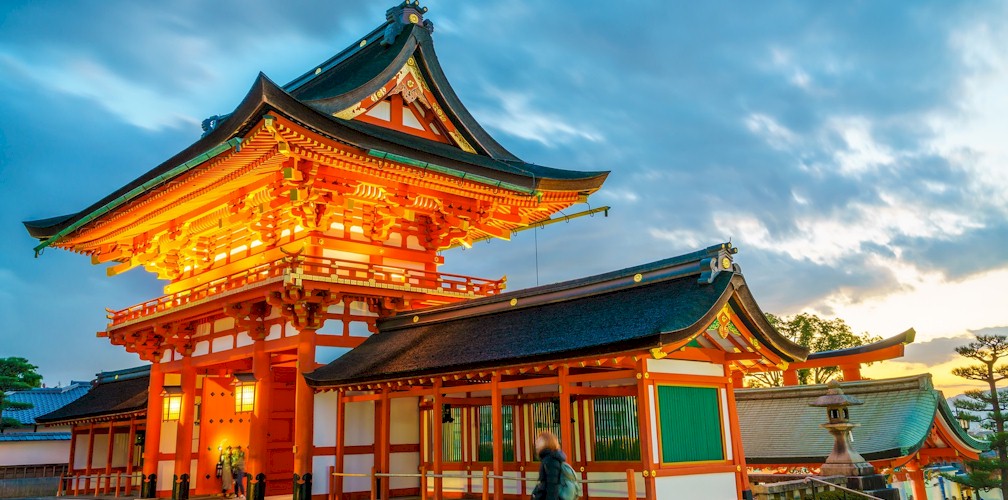
Fushimi Inari Taisha is among Japan’s most recognizable religious sites. Its corridors of vermilion torii gates have become a global visual symbol, frequently detached from their religious context.
The shrine is dedicated to Inari, associated with rice, agriculture, prosperity, industry, and commercial success. Fox figures appear throughout the grounds as messengers connected with the deity. They are not simply decorative animals, nor should they be interpreted as the deity itself.
The site extends onto Mount Inari. The experience changes as visitors climb. Near the base, crowds are dense, photography is constant, and commercial activity is visible. Higher on the mountain, the flow usually thins. Small shrines, stone altars, wooded sections, and quieter paths create a different atmosphere.
3. Kinkaku-ji and Kyoto’s Temple Landscape
Kinkaku-ji, commonly called the Golden Pavilion, is visually immediate. Its upper stories are covered in gold leaf, and the building is positioned beside a reflecting pond within a carefully designed landscape.
That visual clarity partly explains its popularity. The site can be understood quickly at the level of appearance: a golden structure, water, trees, and seasonal color. Yet its history is more complicated.
The pavilion was associated with the retirement villa of the shogun Ashikaga Yoshimitsu and later became part of a Zen Buddhist temple. The present building is a reconstruction, following the destruction of the earlier pavilion by fire in 1950.
4. Nara Park and Tōdai-ji: Monumentality, Ritual, and Public Space
Nara served as Japan’s permanent capital during the eighth century before the imperial center moved elsewhere. The city’s historic zone preserves a concentration of temples, shrines, parkland, museums, and archaeological significance.
Tōdai-ji is the central attraction for many visitors. Its Great Buddha Hall contains a monumental bronze Buddha associated with Vairocana. The scale is difficult to communicate through measurements alone. The experience depends on entering a vast timber structure and encountering the figure within a dim, resonant interior.
The temple emerged within a period when Buddhism, state formation, imperial authority, and continental influence were closely connected. Tōdai-ji was not simply a private religious institution. It participated in a national political and spiritual system.
5. Mount Fuji and the Fuji Five Lakes Region
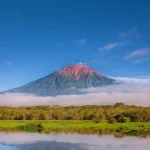
Mount Fuji is both a physical mountain and a cultural image. Its nearly symmetrical volcanic form has influenced religion, poetry, painting, printmaking, tourism, national identity, and international perceptions of Japan.
The mountain should not be understood solely as a climbing objective. For many visitors, the more meaningful experience is observation from the surrounding landscape.
The Fuji Five Lakes region offers several viewing environments. Lake Kawaguchi is among the most accessible and developed. Other lakes provide different balances of scenery, accommodation, transportation, and quiet. The mountain can also be viewed from Hakone, the Izu region, Shizuoka, train routes, and elevated urban locations when atmospheric conditions permit.
6. Hiroshima Peace Memorial Park: Memory, Evidence, and Emotional Responsibility
Hiroshima Peace Memorial Park occupies a different moral category from most tourist attractions. It is a public landscape of remembrance, historical evidence, mourning, education, and political meaning.
The atomic bombing of Hiroshima on August 6, 1945, caused catastrophic destruction and loss of life. The effects continued through injury, radiation exposure, illness, displacement, trauma, and long-term social consequences.
7. Itsukushima Shrine and Miyajima: Sacred Island, Tides, and Visitor Economy
Miyajima, officially known as Itsukushima, is famous for the large torii gate associated with Itsukushima Shrine. At high tide, the gate appears to stand in the sea. At low tide, visitors may be able to walk across the exposed tidal ground toward it.
The difference between high and low tide changes the entire visual structure of the site. Travelers who care strongly about a particular view should check tide conditions rather than assuming the landscape remains constant.
Itsukushima Shrine is built over the tidal zone, with corridors and structures designed in relation to water. The island has long been considered sacred, and religious practices shaped its development.
8. Himeji Castle: Defensive Architecture and Material Survival
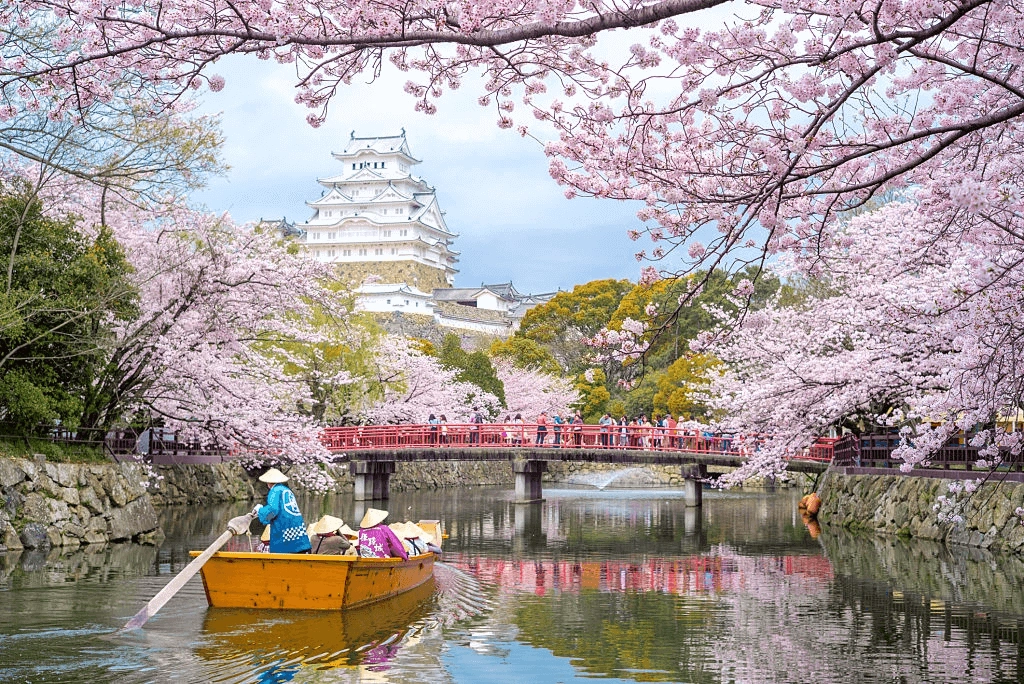
Himeji Castle is one of Japan’s most important surviving castle complexes. Its white exterior, layered roofs, defensive routes, gates, walls, towers, and central keep create both visual elegance and military complexity.
The castle’s beauty can obscure its defensive purpose. Approaching the main keep involves turns, narrowing passages, gates, changes in elevation, and spatial confusion. These features were designed to slow, expose, and disorient attackers.
Unlike many reconstructed Japanese castles, Himeji retains substantial historic wooden architecture. That material survival gives the site exceptional value.
Key Categories, Variations, and Trade-Offs
The eight attractions can be grouped into several categories. These categories help travelers understand what kind of experience each place offers and what trade-offs it imposes.
Urban-cultural attractions
Tokyo belongs primarily to this category. Its value comes from density, contrast, infrastructure, commerce, neighborhoods, museums, and contemporary life.
Advantages
- Strong transportation
- Wide accommodation range
- Flexibility in bad weather
- Extensive food choices
- Easy combination of multiple themes
Trade-offs
- Decision overload
- Long travel times within the city
- Sensory fatigue
- High accommodation costs in some districts
- Risk of superficial district-hopping
Active religious sites
Fushimi Inari, Kinkaku-ji, Tōdai-ji, and Itsukushima Shrine remain connected to living religious traditions.
Advantages
- Strong cultural depth
- Architectural and ritual interest
- Opportunities for walking and reflection
- Seasonal variation
Trade-offs
- Crowding
- Behavioral expectations
- Risk of reducing worship spaces to photography locations
- Uneven accessibility
- Limited interpretive material in some areas
Natural and sacred landscapes
Mount Fuji is the clearest example, with Miyajima and Mount Misen also fitting partly within this category.
Advantages
- Strong visual identity
- Physical immersion
- Seasonal transformation
- Connection between culture and environment
Trade-offs
- Weather uncertainty
- Transportation complexity
- Physical demands
- Environmental pressure
- Safety risks
Memorial and educational sites
Hiroshima Peace Memorial Park represents this category.
Advantages
- Historical depth
- Documentary evidence
- Ethical reflection
- Strong educational value
Trade-offs
- Emotional intensity
- Need for adequate time
- Risk of insensitive visitor behavior
- Difficulty combining with a highly compressed leisure schedule
Surviving historic architecture
Himeji Castle is the strongest example.
Advantages
- Material authenticity
- Construction insight
- Spatial understanding of historical defense
- Strong visual character
Trade-offs
- Steep stairs
- Congestion
- Limited mobility access
- Weather exposure in outdoor areas
Reconstructed heritage
Kinkaku-ji and major parts of Sensō-ji demonstrate how reconstructed places can remain culturally important.
Advantages
- Preservation of historic form
- Continued ritual or civic use
- Accessibility to major historical narratives
- Strong educational potential
Trade-offs
- Visitor misunderstanding about originality
- Simplified authenticity debates
- Potential overemphasis on appearance
Comparison Table
| Attraction | Primary Character | Typical Time Needed | Physical Demand | Crowd Sensitivity | Weather Sensitivity | Best Planning Approach |
|---|---|---|---|---|---|---|
| Tokyo and Sensō-ji | Urban and religious | Half day to several days | Moderate | High | Low to moderate | Organize by district |
| Fushimi Inari | Sacred mountain shrine | 2–4 hours | Moderate to high | Very high | Moderate | Visit early or late |
| Kinkaku-ji | Temple and garden | 1–2 hours | Low to moderate | Very high | Moderate | Pair with nearby sites |
| Nara and Tōdai-ji | Historic park and temple | Half to full day | Moderate | High | Moderate | Walk a thematic route |
| Mount Fuji region | Natural and sacred landscape | Full day or overnight | Variable | High in key areas | Very high | Build in flexibility |
| Hiroshima Peace Park | Memorial and museum | 3–5 hours | Low to moderate | Moderate to high | Low | Protect reflective time |
| Miyajima | Shrine, island, and mountain | Half to full day | Moderate to high | High | High | Check tides and ferries |
| Himeji Castle | Historic military architecture | 2–4 hours | Moderate | High | Moderate | Use as a rail stopover |
Realistic decision logic
A first-time traveler with one week should not attempt all eight unless willing to move quickly. Tokyo, Kyoto, and one additional regional cluster will usually produce a more coherent trip.
A traveler with ten to fourteen days can include most or all eight by following the main rail corridor:
- Tokyo
- Mount Fuji region
- Kyoto
- Nara
- Himeji
- Hiroshima
- Miyajima
Even then, pacing matters. Kyoto deserves multiple days. Tokyo can absorb an entire week. Mount Fuji may require schedule flexibility. Hiroshima and Miyajima can be combined, but separating them improves depth.
The correct question is not, “How many attractions can fit?” It is, “How much movement can occur before the journey loses meaning?”
Detailed Real-World Scenarios
The first-time visitor with seven nights
Constraints
- Arrival and departure through Tokyo
- Strong interest in traditional culture
- Limited experience using Japanese transportation
- Moderate budget
- Desire to see Tokyo and Kyoto
Decision points
The traveler must choose between depth in two regions and adding a third destination.
A practical structure might include:
- Three nights in Tokyo
- Three nights in Kyoto
- One final night near the departure airport or in Tokyo
Nara can be added as a day trip from Kyoto. Himeji, Hiroshima, Miyajima, and Mount Fuji would likely require sacrificing depth or increasing travel pressure.
Failure mode
The traveler adds an overnight Mount Fuji visit, a Nara day trip, Himeji, and Hiroshima. Accommodation changes multiply. Luggage must be managed repeatedly. Kyoto becomes a sequence of rushed temple stops.
Second-order effect
Because the traveler is tired, early morning plans fail. Fushimi Inari is visited at peak crowding. Meals become convenience decisions rather than regional experiences. The itinerary technically succeeds but produces weak memory.
Better logic
Choose Tokyo, Kyoto, and Nara. Treat the omitted attractions as future possibilities rather than planning failures.
A family traveling with two children
Constraints
- Children aged six and ten
- Limited tolerance for long museum visits
- Need for regular meals and rest
- Concern about steep stairs
- Interest in castles and animals
Decision points
Nara is attractive because of the deer and open park environment, but adult supervision is essential. Himeji Castle may excite the children, yet the steep stairs can be difficult. Hiroshima’s museum is historically important, but parents must decide how to prepare children for disturbing material.
Failure mode
The family follows an adult-paced itinerary with early departures, long train journeys, temple visits, and delayed meals.
Second-order effect
The children associate cultural sites with fatigue. Parents begin abandoning planned activities, creating frustration over prepaid tickets or accommodation choices.
Better logic
Build one major attraction per day, with a secondary flexible activity. Use parks, river walks, interactive museums, food stops, and hotel rest periods as structural components rather than optional breaks.
A photography-focused traveler
Constraints
- Priority on sunrise and evening light
- Heavy equipment
- Desire for uncrowded images
- Flexible accommodation budget
- High sensitivity to weather
Decision points
The traveler may choose overnight stays near Mount Fuji and on Miyajima. Early visits to Fushimi Inari and Sensō-ji become important. Tide conditions influence Miyajima photography.
Failure mode
The traveler expects iconic scenes to be empty and becomes frustrated by other visitors. Restricted areas are entered to find unique angles. The itinerary depends too heavily on one forecast.
Second-order effect
Chasing perfect conditions reduces engagement with history and local life. Equipment becomes physically exhausting. Ethical boundaries weaken under competitive pressure.
Better logic
Accept the presence of other visitors as part of contemporary reality. Use multiple viewing locations, allow weather backup days, and separate documentary photography from staged social-media imagery.
A traveler interested in history rather than scenery
Constraints
- Strong interest in political, military, and social history
- Limited interest in shopping
- Preference for museums and preserved structures
- Twelve-day trip
Decision points
The itinerary should emphasize Himeji, Nara, Kyoto, Hiroshima, and Tokyo’s museum districts. Mount Fuji may remain optional unless connected to religious history or landscape art.
Failure mode
The traveler assumes all historic temples provide similar information and schedules too many without interpretive preparation.
Second-order effect
Architectural and doctrinal differences blur together. Museum fatigue reduces comprehension.
Better logic
Assign themes:
- Nara for early state Buddhism
- Kyoto for court, warrior, and religious institutions
- Himeji for military architecture
- Hiroshima for modern war and memory
- Tokyo for urban transformation and national institutions
Planning, Cost, and Resource Dynamics
Japan can support many travel budgets, but major attractions are embedded in broader cost systems. Admission fees are only one part of the equation.
Direct costs
Direct expenses include:
- International airfare
- Accommodation
- Intercity transportation
- Local trains and buses
- Attraction admission
- Food
- Luggage storage or forwarding
- Travel insurance
- Mobile data
- Taxes and service charges
- Climbing or conservation fees where applicable
Many temples, shrines, museums, gardens, and castles charge modest individual admission fees. The cumulative amount becomes meaningful when multiple sites are visited daily.
Indirect costs
Indirect costs are less visible:
- Time lost during transfers
- Higher hotel prices near major stations
- Taxi use after fatigue
- Convenience-store meals caused by poor scheduling
- Luggage lockers during stopovers
- Replacement items after inadequate preparation
- Cancellation losses from weather-dependent activities
- Reduced productivity or recovery time after returning home
Opportunity cost
Every attraction consumes time that could be used elsewhere.
A day at Mount Fuji may replace another day in Tokyo. A day trip to Hiroshima from Kyoto may involve several hours of rail travel. Visiting Kinkaku-ji may require crossing Kyoto when another temple cluster is geographically closer.
Opportunity cost does not mean that the choice is wrong. It means the choice should be visible.
Variability
Prices vary by:
- Season
- Day of the week
- Booking timing
- City
- Room size
- Hotel category
- Event calendar
- Exchange rates
- Transportation type
- Cancellation conditions
Cherry blossom season, autumn foliage periods, major holidays, festivals, and weekends can increase demand.
Approximate Daily Cost Ranges
The following ranges are planning models rather than guarantees. International airfare is excluded.
| Travel Style | Accommodation | Food | Local Transport | Attractions and Activities | Approximate Daily Total |
|---|---|---|---|---|---|
| Budget | $30–$70 | $20–$40 | $8–$20 | $5–$20 | $63–$150 |
| Moderate | $90–$180 | $40–$80 | $12–$35 | $15–$50 | $157–$345 |
| Comfortable | $200–$400 | $80–$160 | $25–$70 | $30–$100 | $335–$730 |
| High-end | $450 and above | $150 and above | $60 and above | $80 and above | $740 and above |
Intercity rail can add a substantial amount on transfer days. A Tokyo-to-Kyoto journey, a Hiroshima extension, airport access, and regional side trips should be budgeted separately.
Time as a resource
Time should be divided into four categories:
- Experience time — time actually spent engaging with a place
- Movement time — trains, buses, walking, transfers, and queues
- Recovery time — meals, sleep, rest, laundry, and unscheduled pauses
- Buffer time — delays, weather changes, navigation errors, and unexpected opportunities
Many itineraries count only experience and movement. They omit recovery and buffer. That omission creates plans that appear efficient on paper but collapse in practice.
Tools, Strategies, and Support Systems
1. Geographic clustering
Organize attractions by area rather than fame.
Limit: Geographic efficiency can produce thematic repetition. Several nearby temples may still create fatigue.
2. Luggage forwarding
Japan’s luggage delivery services can transfer bags between hotels, reducing the burden of carrying large suitcases through stations.
This is particularly helpful for:
- Himeji stopovers
- Multi-city rail travel
- Families
- Older travelers
- Travelers visiting small rooms or traditional inns
Limit: Delivery is not always immediate. Travelers need a small overnight bag and must confirm whether accommodations accept or send luggage.
3. Digital navigation
Map applications help with train platforms, transfers, walking routes, and estimated travel times.
Limit: Digital instructions may underestimate station complexity, vertical movement, crowds, or the distance between platforms. Battery failure and weak connectivity can also create problems.
4. Offline records
Keep screenshots or offline notes containing:
- Hotel names in Japanese
- Addresses
- Reservation numbers
- Train information
- Emergency contacts
- Medication details
- Passport copies
- Insurance information
Limit: Copies must be stored securely. Sensitive information should not be left openly accessible.
5. Reservations
Some trains, museums, observation decks, events, restaurants, and special-entry sites may require or benefit from booking.
Limit: Excessive reservations reduce flexibility. A fully booked day becomes vulnerable to one delay.
6. Early-start strategy
Early arrival can reduce crowding at Fushimi Inari, Sensō-ji, Nara, and some Kyoto sites.
Limit: Early starts accumulate sleep debt. They are ineffective if the traveler stays out late every night.
7. Weather-flexible scheduling
Place weather-sensitive attractions, especially Mount Fuji, within a wider window. Keep urban museums or indoor sites as backup options.
Limit: Accommodation and long-distance reservations can restrict flexibility.
8. Thematic preparation
Read a short, reliable overview before visiting a historically complex site. Learn the basic meaning of torii gates, Buddhist halls, castle keeps, memorial structures, and purification rituals.
Limit: Too much preparation can create rigid expectations. A site should still be encountered directly.
Risk Landscape and Failure Modes
Logistical risks
These include missed trains, incorrect platforms, last departures, unavailable luggage storage, hotel check-in restrictions, and attraction closures.
A single logistical failure can compound. Missing a reserved train may lead to a later arrival, missed dinner, reduced sleep, and poor performance the next day.
Physical risks
Heat, humidity, dehydration, steep stairs, prolonged walking, altitude, slippery surfaces, and heavy luggage are common concerns.
Mount Fuji adds cold, wind, altitude symptoms, darkness, and volcanic terrain. Fushimi Inari and Mount Misen involve sustained walking. Himeji’s stairs demand balance and concentration.
Weather risks
Rain affects visibility, footing, photography, and transportation. Typhoons can disrupt rail and air services. Extreme heat can make urban sightseeing hazardous.
The failure is not rain itself. The failure is designing an itinerary with no weather alternatives.
Crowd risks
Crowds create delays, noise, blocked views, transportation pressure, and reduced access to quiet reflection.
At memorial sites and active religious sites, crowd behavior can also change the emotional character of the place.
Cultural risks
Visitors may unintentionally violate expectations by:
- Entering restricted areas
- Photographing where prohibited
- Blocking worshippers
- Speaking loudly
- Touching sacred objects
- Feeding animals improperly
- Wearing outdoor shoes where removal is required
- Treating memorials as entertainment settings
Financial risks
Nonrefundable bookings, inappropriate transport passes, dynamic hotel pricing, and excessive last-minute taxi use can increase costs.
Information risks
Outdated blog posts may describe former ticket systems, older transportation schedules, discontinued passes, or changed access rules.
The more operationally important the information, the closer to departure it should be verified.
Compounding risk
Risks rarely remain isolated.
Consider this sequence:
- A traveler schedules a late arrival in Kyoto.
- The station transfer takes longer than expected.
- Dinner is delayed.
- Sleep is shortened.
- The traveler misses the early alarm for Fushimi Inari.
- Arrival occurs during peak crowds and rising heat.
- Fatigue increases.
- The afternoon temple schedule is abandoned.
- The traveler feels pressure to compensate the following day.
- The next day becomes overloaded.
Good planning interrupts these chains early.
Governance, Maintenance, and Long-Term Adaptation
A travel plan is not a fixed document. It requires maintenance before and during the journey.
Three months before departure
Review:
- Passport validity
- Entry requirements
- Flight structure
- Accommodation strategy
- Major regional route
- Insurance
- Physical preparation
- Seasonal conditions
At this stage, focus on architecture rather than minute scheduling.
One month before departure
Confirm:
- Intercity transport options
- Attraction reservation requirements
- Hotel policies
- Luggage transfer plans
- Weather norms
- Major closures
- Festival or holiday impacts
- Mobile connectivity
One week before departure
Recheck:
- Forecasts
- Transportation disruptions
- Attraction operating hours
- Museum closure days
- Tide times for Miyajima
- Mount Fuji visibility outlook
- Climbing or access regulations if relevant
- Reservation confirmations
Daily review during the trip
Each evening, ask:
- What time must departure occur?
- Which activity is weather-sensitive?
- Which reservation is fixed?
- Where can the day be shortened?
- Is luggage involved?
- How much walking occurred today?
- Is the next day physically realistic?
Adjustment triggers
Modify the plan when:
- Severe weather is forecast
- Fatigue persists into the morning
- A traveler develops pain or illness
- Transportation is disrupted
- Crowding exceeds tolerance
- A child or older traveler needs recovery
- A meaningful unplanned opportunity appears
- The emotional impact of a memorial or museum requires more time
Layered checklist
Essential layer
- Passport
- Money access
- Medication
- Accommodation
- Core transportation
- Insurance
- Emergency information
Operational layer
- Maps
- Data access
- Reservations
- Luggage plan
- Weather protection
- Comfortable footwear
- Charging equipment
Interpretive layer
- Historical background
- Cultural expectations
- Site vocabulary
- Behavioral norms
- Regional context
Adaptive layer
- Backup activities
- Rest periods
- Flexible meals
- Unscheduled time
- Alternative routes
A plan that includes only the operational layer may function efficiently but remain culturally shallow. A plan that includes only the interpretive layer may be intellectually strong but logistically fragile.
Measurement, Tracking, and Evaluation
Travel is not a business project, and it does not need to be reduced to performance metrics. Still, simple evaluation can improve decision-making, especially during a long trip.
Leading indicators
Leading indicators reveal whether the plan is likely to work before failure occurs.
Examples include:
- Average sleep duration
- Number of fixed reservations per day
- Estimated walking distance
- Number of transport transfers
- Weather risk
- Queue expectations
- Frequency of accommodation changes
A day with two hotel changes, four train transfers, and three fixed admission times is structurally fragile even before it begins.
Lagging indicators
Lagging indicators show what happened afterward.
Examples include:
- Attractions skipped
- Unplanned transportation costs
- Physical pain
- Missed meals
- Number of rushed visits
- Memory clarity after several days
- Emotional satisfaction
- Conflict within the travel group
Quantitative signals
Useful numerical records may include:
- Daily spending
- Walking distance
- Transit time
- Sleep
- Number of sites
- Queue duration
These numbers can reveal patterns. They should not become goals by themselves.
Qualitative signals
Qualitative evaluation asks:
- Did the place feel understood?
- Was there enough time to observe?
- Did crowding dominate the experience?
- Was the visit emotionally appropriate?
- Did the attraction connect with earlier parts of the trip?
- Would an additional hour have improved the experience?
- Was the traveler present, or mostly managing logistics?
Daily decision note
Planned: Fushimi Inari, Kiyomizu-dera, Gion, Kinkaku-ji
Actual: Fushimi Inari and Kiyomizu-dera
Reason: Heat and crowding increased fatigue
Lesson: Two geographically separated major sites are sufficient in summer
Attraction reflection
Site: Hiroshima Peace Memorial Museum
Time spent: Three hours
Strongest element: Personal objects and testimony
Planning issue: No quiet transition afterward
Future adjustment: Leave the following hour unscheduled
Cost record
Route: Kyoto to Himeji to Hiroshima
Costs recorded: Train, locker, castle admission, local transit, food
Unexpected cost: Large luggage locker
Lesson: Forward main luggage before stopover
Group-energy check
Morning energy: High
Afternoon energy: Low
Cause: Early departure and insufficient lunch
Decision: Cancel evening observation deck
Result: Better recovery for next day
The purpose of evaluation is not to judge whether a trip was productive. It is to identify which conditions create meaningful travel and which conditions repeatedly weaken it.
Common Misconceptions and Oversimplifications
Japan’s main attractions are all easy to combine.
Japan’s transportation system is extensive, but distance and transfers still matter. The existence of fast trains does not eliminate hotel check-ins, station navigation, local buses, luggage, and waiting.
Kyoto is a preserved traditional city.
Kyoto contains exceptional historic districts and religious sites, but it is also a modern city with traffic, apartments, offices, universities, convenience stores, and commercial development.
Treating the whole city as an open-air museum ignores contemporary residents.
Mount Fuji is always visible.
Visibility is highly variable. Clouds can obscure the mountain for hours or an entire day. No responsible itinerary should depend on a guaranteed view.
Reconstructed buildings are culturally meaningless.
Reconstruction can preserve design, ritual continuity, spatial relationships, craftsmanship, and collective memory. The important question is not merely whether rebuilding occurred, but what was reconstructed, how, why, and with what evidence.
Shrines and temples are interchangeable.e
Shinto shrines and Buddhist temples differ in religious tradition, architecture, ritual practice, objects, and historical development. They have also influenced each other across centuries, making the relationship more complex than a strict visual classification.
Ethical, Practical, and Contextual Considerations
Active worship spaces
Temples and shrines are not designed only for tourism. Visitors may encounter ceremonies, prayer, offerings, weddings, funerals, seasonal rites, and local worshippers.
Tourist access does not erase sacred function.
Residential boundaries
Some famous districts overlap with residential neighborhoods. Narrow streets, private entrances, schools, small businesses, and local transport continue to serve residents.
Photography should not require trespassing, blocking traffic, entering private property, or following individuals.
Memorial behavior
At Hiroshima, visitors should distinguish documentation from performance. The site can be photographed, but the emotional meaning of the setting should shape posture and conduct.
Animal welfare
Feeding deer should follow local guidance. Packaging must be kept away from animals. Teasing, chasing, riding, or forcing photographs is inappropriate.
Environmental pressure
Natural sites require stronger impact awareness:
- Stay on designated paths
- Carry waste out when necessary
- Avoid unauthorized climbing
- Follow seasonal access restrictions
- Do not damage vegetation
- Use toilets and waste systems responsibly
- Respect conservation fees and visitor limits
Local economic participation
Tourism spending can support local communities, but not all spending has equal regional impact. Small restaurants, family-run accommodations, local crafts, regional foods, museums, and guided cultural experiences may retain more value locally than standardized purchases from large chains.
This should not become a purity test. Chain stores can be practical, affordable, and culturally revealing in their own way. The goal is balance.
Social-media pressure
Many harmful behaviors begin with the desire to reproduce a specific image. The traveler sees an empty staircase, a solitary torii corridor, a deer bowing on command, or a perfectly aligned mountain view. The actual site may be crowded, restricted, environmentally fragile, or culturally sensitive.
The ethical response is to adapt the image to the place, not force the place to match the image.
Conclusion
Japan’s leading attractions are not isolated objects waiting to be collected. They are parts of living systems. Tokyo reveals how history survives inside a continuously rebuilding metropolis. Fushimi Inari shows how religious devotion, business patronage, mountain geography, and global photography can occupy the same space. Kinkaku-ji raises questions about reconstruction, authenticity, and the visual power of designed landscapes. Nara connects early state formation, Buddhist monumentality, sacred animals, and public parkland.
Mount Fuji introduces uncertainty. Its visibility cannot be guaranteed, its physical risks cannot be ignored, and its meaning extends beyond recreation. Hiroshima demands historical attention and emotional seriousness. Miyajima demonstrates how tides, ritual, tourism, and island geography shape one another. Himeji Castle preserves the material intelligence of defensive architecture.
FAQ
What are the most popular cultural landmarks to include when exploring 8 Japan Tourist Attractions?
Prominent itineraries typically feature a blend of sacred spaces, feudal architecture, and urban centers, such as Kyoto’s historic temples, Himeji Castle, Tokyo’s urban districts, and the Hiroshima Peace Memorial Park. However, selection should depend on seasonal timing, personal interests, and regional pacing rather than strict adherence to generic lists.
How far in advance should accommodations and attraction tickets be booked?
For peak travel periods such as cherry blossom season in spring and autumn foliage windows in November, booking accommodations 6 to 9 months in advance is essential. High-demand museum exhibits and specialized entry slots also require reservations weeks ahead of the arrival date.
Is cash still necessary when visiting major destinations in Japan?
Yes. While major hotels, department stores, and urban transit systems readily accept digital IC cards and credit cards, many traditional temples, rural family-run inns, local food stalls, and regional shrines operate strictly on cash transactions.