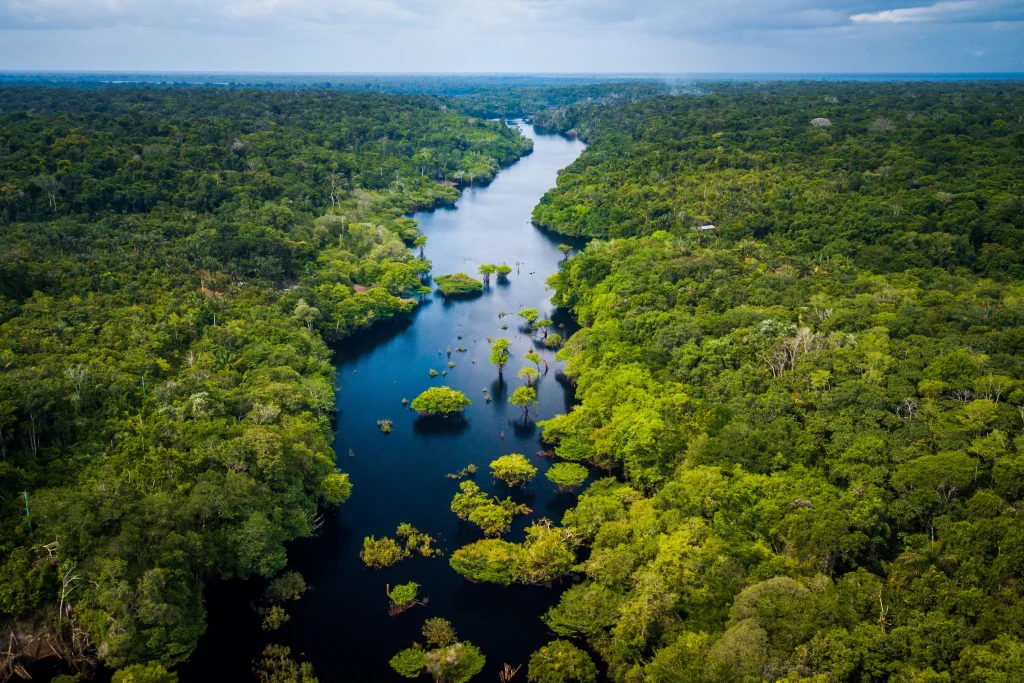
dirganews.com – The idea of entering a tropical rainforest alone carries a certain clarity at first glance. It appears to be a matter of navigation, endurance, and perhaps a degree of courage. What seems like a physical challenge is, in practice, a problem of interpretation. The forest does not present itself as a coherent landscape. It fragments perception. Lines of sight are limited, landmarks are ambiguous, and environmental signals, such as sound, humidity, and light, shift constantly. The concept of “solo” in this context is therefore less about isolation and more about the absence of redundancy. There is no external correction mechanism when decisions compound. What complicates matters further is scale. The Brazilian rainforest system, often associated with the Amazon Rainforest, is not a uniform expanse but a network of ecological zones. To treat the jungle as a single environment is to overlook the variability that defines it.
This article approaches the subject not as an exercise in adventure but as a system analysis. It examines what independent movement in such an environment entails structurally, operationally, and conceptually. The goal is not to simplify the jungle but to make its complexity legible, particularly in the context of solo engagement.
Understanding “Brazil jungle solo.”
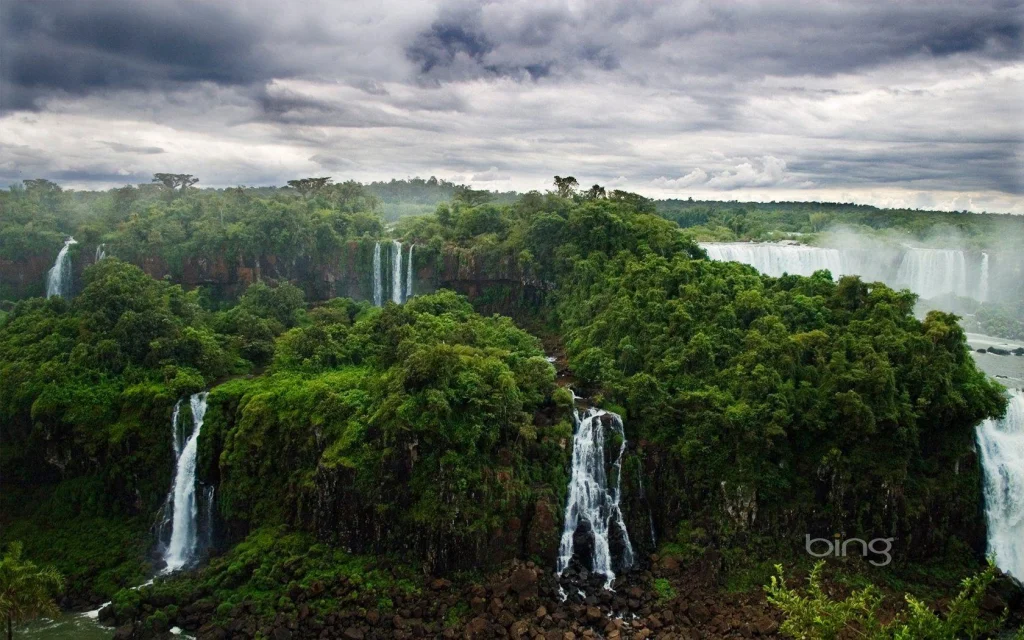
wallpaperaccess.com
The phrase “Brazil jungle solo” is often interpreted literally: an individual navigating a rainforest independently. While accurate at the surface level, this interpretation omits the structural implications of both “jungle” and “solo.”
Second, “solo” does not simply mean alone. It implies the absence of external correction. In group settings, errors can be identified and adjusted collectively. Alone, errors persist until recognized, and recognition may come too late. This changes the nature of decision-making. Actions must be evaluated not only for immediate outcomes but for their potential to compound.
Deep Contextual Background
The Brazilian rainforest system has evolved over millions of years, shaped by climatic stability and hydrological complexity. Unlike temperate forests, where seasonal variation plays a dominant role, tropical rainforests operate under relatively consistent temperature regimes. This stability has allowed for the development of highly specialized ecological niches. The Amazon Basin, which contains the majority of Brazil’s rainforest, is structured around a vast network of rivers. These waterways influence soil composition, vegetation patterns, and accessibility.
Human presence in the region predates modern exploration by thousands of years. Indigenous communities have developed systems of knowledge that integrate navigation, resource use, and environmental interpretation. These systems are not static; they adapt to changing conditions while maintaining continuity.
Conceptual Frameworks and Mental Models
1. The Visibility Constraint Model
In dense forest environments, visibility is limited. Navigation relies less on distant landmarks and more on immediate cues.
Limit: Overreliance on local cues can lead to cumulative directional error.
2. The Friction-Based Movement Model
Movement is slowed by terrain, vegetation, and water. Progress is uneven and energy-intensive.
Limit: Energy expenditure is difficult to estimate accurately.
3. The Information Scarcity Framework
Environmental signals are abundant but ambiguous. Distinguishing relevant information from noise is a constant challenge.
Limit: Misinterpretation can lead to incorrect decisions.
4. The Redundancy Absence Model
Solo operation removes backup systems. Errors are not easily corrected.
Limit: High cognitive load increases the likelihood of mistakes.
5. The Adaptive Loop Model
Continuous adjustment is required. Plans must evolve in response to changing conditions.
Limit: Constant adaptation can lead to decision fatigue.
Key Categories and Environmental Variations
Major Categories
- Terra firme forests
- Flooded forests (várzea)
- River corridors
- Secondary growth जंगल
- Swamp and wetland areas
- Elevated ridges
- Transitional ecotones
Comparative Table
| Category | Water Presence | Accessibility | Navigation Complexity | Stability |
|---|---|---|---|---|
| Terra firme | Low | Moderate | High | High |
| Várzea | Seasonal | Difficult | Very High | Low |
| River corridors | High | Moderate | Moderate | Variable |
| Secondary growth | Moderate | Difficult | High | Moderate |
| Wetlands | High | Very Difficult | Very High | Low |
| Ridges | Low | Moderate | Moderate | High |
Decision Logic
Terrain selection influences risk exposure, energy use, and navigation reliability. River corridors may simplify direction but introduce other hazards. Dense interior forest offers stability but increases navigation difficulty.
Real-World Scenarios and Operational Realities
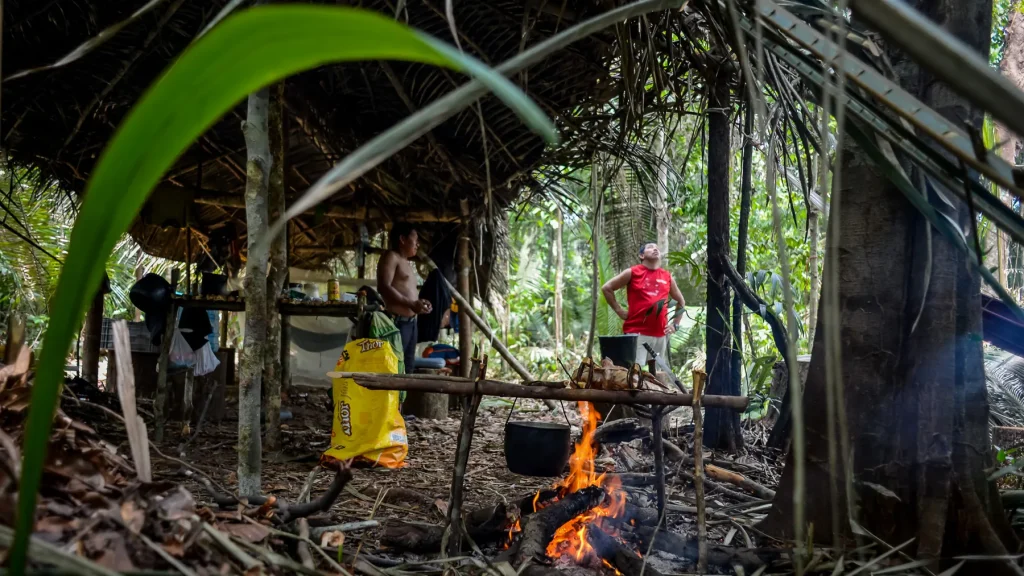
www.amazonbraziljungletours.com
Abstract understanding becomes insufficient the moment movement begins. The rainforest does not behave like a controlled environment where variables can be isolated and managed independently. Instead, constraints emerge simultaneously: terrain, weather, visibility, and fatigue; each influences the others. In a Brazilian jungle solo context, scenarios are not hypothetical exercises but recurring patterns shaped by environment and decision-making.
What follows are representative operational situations. Each illustrates how constraints interact, where decision points emerge, and how small miscalculations can cascade into larger failures.
River-Aligned Navigation
Rivers are often treated as natural guides. They provide directional clarity and, in many cases, access to water and movement corridors. At first glance, they appear to simplify navigation.
However, reliance on river systems introduces its own constraints. River paths are not linear in the intuitive sense. They curve, branch, and sometimes double back. Following a river downstream may lead to larger waterways, but it can also move an individual away from intended destinations if orientation is not continuously verified.
Constraints:
- Variable current strength and water levels
- Limited visibility along riverbanks due to vegetation
- Difficulty transitioning from river to inland routes
Decision Points:
- Whether to prioritize directional certainty over speed
- When to leave the river to correct the trajectory
- How to balance water access with navigation accuracy
Failure Mode:
Overdependence on the river as a directional reference.
Second-Order Effect:
Gradual deviation from the intended path, leading to increased distance and resource depletion before the error becomes apparent.
Interior Forest Traversal
Moving away from waterways into dense forest introduces a different set of challenges. Visibility drops significantly, and landmarks become less distinct. Direction must be maintained through continuous micro-adjustments rather than long-range alignment.
The forest floor itself is uneven, often obstructed by roots, fallen branches, and dense undergrowth. Movement becomes slower and more physically demanding.
Constraints:
- Limited line of sight
- High energy expenditure
- Ambiguous environmental cues
Decision Points:
- Establishing and maintaining a consistent bearing
- Determining when to stop and reassess direction
- Balancing speed with accuracy
Failure Mode:
Directional drift caused by small, uncorrected deviations.
Second-Order Effect:
Cumulative error resulting in significant displacement, often without immediate awareness.
Seasonal Flood Conditions
In flooded forest zones, water transforms the landscape. Paths that were previously navigable become submerged, and new routes emerge unpredictably. Movement may shift from walking to wading or even improvised flotation.
Flood conditions also alter the distribution of resources. Some areas become inaccessible, while others temporarily provide new opportunities.
Constraints:
- Unstable footing and hidden obstacles
- Increased physical effort for movement
- Altered navigation references
Decision Points:
- Whether to proceed through flooded areas or reroute
- How to assess water depth and current safely
- When to pause movement due to increased risk
Failure Mode:
Underestimating the impact of water on mobility and safety.
Second-Order Effect:
Loss of momentum, increased fatigue, and heightened exposure to environmental risks.
Planning, Cost, and Resource Dynamics
Cost Table
| Category | Low Range | High Range | Variability |
|---|---|---|---|
| Transportation | Moderate | High | Access |
| Equipment | Moderate | High | Durability |
| Supplies | Low | High | Duration |
| Risk Mitigation | Moderate | High | Conditions |
Indirect costs include opportunity costs and long-term health impact.
Tools, Strategies, and Support Systems
Operating alone in a dense tropical forest is not simply a matter of carrying equipment. Tools, in this context, function as extensions of perception and decision-making. They do not remove uncertainty; they reshape how uncertainty is managed. The distinction matters. Overreliance on any single tool, technological or procedural, tends to create blind spots, particularly in an environment where conditions can degrade performance without warning.
In a Brazilian jungle solo setting, tools and strategies must be considered as an integrated system. Each component has limits, and those limits often become visible only under stress.
Navigation Systems: Orientation Under Constraint
Navigation in dense forest environments is less about plotting a route and more about maintaining directional integrity over time. The absence of clear landmarks requires reliance on instruments and a consistent method.
Core Tools:
- Compass for maintaining bearing
- GPS devices for positional reference
- Topographic maps were available
Operational Strategy:
Navigation should be iterative rather than linear. Instead of setting a distant endpoint, movement is broken into short segments with regular verification. This reduces cumulative error.
Limitations:
- GPS signals may degrade under a dense canopy
- Maps may lack sufficient resolution
- Compass use requires disciplined consistency; small deviations accumulate
No single navigation tool is sufficient on its own. Redundancy is not optional;l it is structural.
Water Management Systems: Availability vs. Usability
Water is abundant in appearance but not always immediately usable. Rivers, streams, and rainfall provide sources, but each introduces variables related to quality and accessibility.
Core Tools:
- Portable filtration systems
- Chemical purification methods
- Collapsible storage containers
Operational Strategy:
Water should be treated as both a resource and a constraint. Movement decisions often depend on proximity to reliable sources, but overdependence on visible water can distort route planning.
Limitations:
- Filtration systems can clog or fail
- Chemical treatments require time and proper dosing
- Storage capacity limits flexibility
Water management is less about finding water and more about ensuring it can be safely and efficiently used.
Shelter and Exposure Control: Managing Micro-Conditions
The forest does not expose individuals to a single set of conditions but to a series of micro-environments. Shelter systems must account for humidity, rainfall, and temperature variation.
Core Tools:
- Lightweight tarps or hammocks
- Water-resistant coverings
- Insulation layers adapted to humidity
Operational Strategy:
Shelter is not only for rest but for maintaining operational capacity. Protecting equipment and preserving body temperature directly influence decision-making ability.
Limitations:
- High humidity reduces the effectiveness of insulation
- Improvised setups may fail under heavy
- Setup time competes with daylight and energy constraints
Shelter is a dynamic requirement, not a static solution.
Communication Systems: Extending Reach Beyond Isolation
A solo operation does not necessarily imply complete disconnection. Communication tools can provide a limited extension of support systems.
Core Tools:
- Satellite communication devices
- Emergency signaling equipment
- Redundant power sources
Operational Strategy:
Communication should be treated as contingency rather than primary support. Regular check-ins, where possible, create a baseline of accountability.
Limitations:
- Signal reliability varies
- Devices depend on power management
- Communication does not eliminate immediate risk
The presence of communication tools can create a false sense of security if their limitations are not fully considered.
Environmental Knowledge Systems: Interpreting Signals
Tools alone cannot interpret the environment. Knowledge, particularly contextual and experiential, functions as a critical support system.
Core Elements:
- Understanding vegetation patterns
- Recognizing water indicators
- Interpreting animal behavior
Operational Strategy:
Observation must be continuous and selective. Not all signals are relevant, and distinguishing meaningful patterns requires practice.
Limitations:
- Misinterpretation can lead to incorrect conclusions.
- Knowledge may not transfer across different forest zones
- Overconfidence in partial knowledge increases risk
Environmental understanding is cumulative and context-dependent.
Energy Management Strategies: Sustaining Capacity
Physical effort in dense forest environments is uneven and often underestimated. Energy management becomes a central operational concern.
Core Approaches:
- Pacing movement to avoid exhaustion
- Scheduling rest intervals strategically
- Balancing workload with recovery
Operational Strategy:
Energy should be treated as a finite resource that influences every decision. Overexertion reduces both physical capability and cognitive clarity.
Limitations:
- Energy expenditure is difficult to measure accurately
- External conditions (heat, humidity) accelerate fatigue
- Recovery opportunities may be limited
Sustaining capacity is often more important than maximizing speed.
Redundancy and Layered Planning: Preparing for Failure
Redundancy is not excess; it is a response to uncertainty. Systems fail, and when they do, alternatives must be available.
Core Elements:
- Backup navigation tools
- Multiple water purification methods
- Secondary communication options
Operational Strategy:
Planning should assume that at least one component will fail. Redundancy reduces the impact of that failure.
Limitations:
- Additional equipment increases the weight and complexity. ity
- Managing multiple systems requires discipline
- Redundancy does not eliminate risk; it redistributes it
Effective redundancy balances preparedness with practicality.
Decision Frameworks: Structuring Choice Under Pressure
Tools and strategies ultimately support decision-making. Without a structured approach, the volume of variables can become overwhelming.
Core Principles:
- Break decisions into smaller, manageable steps
- Prioritize immediate stability over long-term goals when necessary
- Reassess conditions regularly
Operational Strategy:
Decisions should be iterative, with built-in checkpoints. This reduces the likelihood of large, uncorrected errors.
Limitations:
- Time pressure can force shortcuts
- Cognitive fatigue reduces decision quality
- Overanalysis can delay necessary action
Decision frameworks are most effective when applied consistently, not selectively.
System Integration
No single tool or strategy operates in isolation. Navigation influences energy use. Shelter affects recovery. Communication shapes risk perception. Each component interacts with others, creating a system that must be managed as a whole.
In a Brazilian jungle solo context, the effectiveness of tools and strategies depends less on their individual capabilities and more on how they are integrated. The environment does not accommodate fragmented approaches. It requires coherence and alignment between tools, knowledge, and decision-making processes.
Operational Insight
The presence of tools can create the impression of control. In reality, control is partial and conditional. Tools extend capability, but they also introduce dependencies. Understanding their limits is as important as understanding their functions.
In the end, tools and strategies do not define success. They shape the conditions under which decisions are made. The environment remains the dominant factor, and any system that ignores that hierarchy is likely to fail.
Risk Landscape and Failure Modes
Risks include:
- Environmental (weather, terrain)
- Operational (navigation errors)
- Cognitive (fatigue, misjudgment)
Risks often interact, creating cascading effects.
Governance, Maintenance, and Long-Term Adaptation
Effective systems rely on:
- Continuous monitoring
- Regular reassessment
- Adaptive decision-making
- Structured contingency planning
Measurement, Tracking, and Evaluation
Indicators
- Leading: energy levels, resource availability
- Lagging: health condition, navigation accuracy
Documentation
- Movement logs
- Resource tracking
- Environmental observations
- Decision records
Common Misconceptions and Oversimplifications
- The jungle is easy to navigate
- Water is always accessible
- Wildlife is the primary risk
- Movement is straightforward
- Technology ensures safety
- The environment is uniform
- Solo travel is purely physical
Ethical and Contextual Considerations
Respect for indigenous knowledge systems is essential. Environmental impact must be minimized. The jungle is not a space but a living system with existing relationships.
Conclusion
Brazil jungle solo is not a singular activity but a complex interaction between individual decision-making and a dynamic environment. It requires understanding systems rather than relying on assumptions. The rainforest does not simplify itself for human interpretation. It demands adaptation, attention, and a willingness to engage with uncertainty.