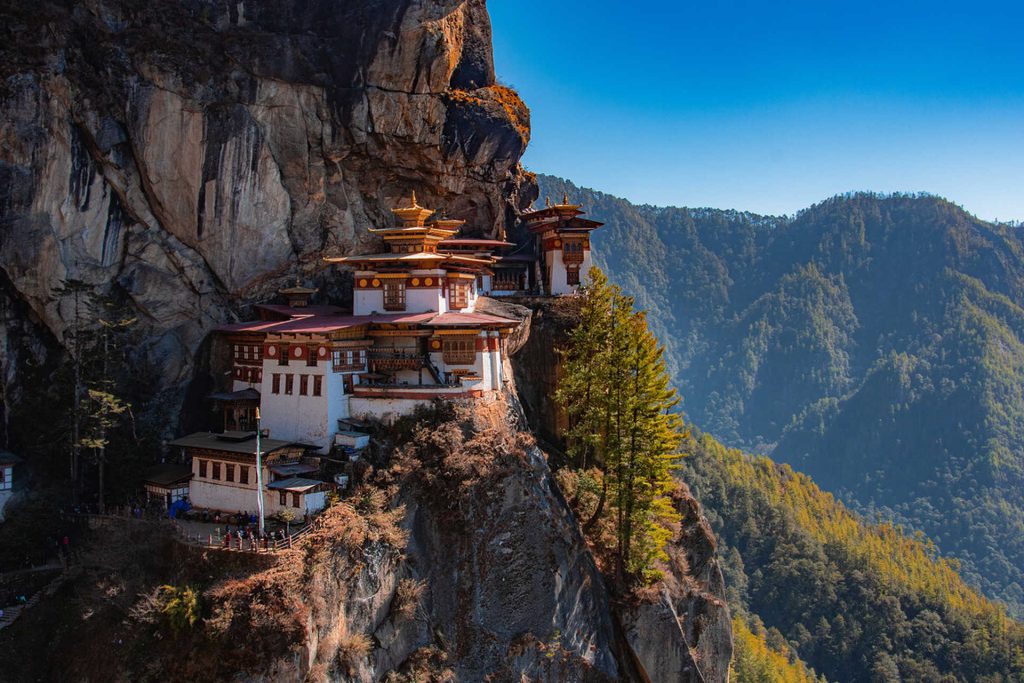
dirganews.com – The Taktsang Palphug Monastery is anchored to a vertical granite cliff 3,000 feet above the Paro Valley. It serves as the primary symbol of Bhutanese identity. Known globally as the “Tiger’s Nest,” this marvel is not merely a destination for endurance travellers. It is a profound testament to Vajrayana Buddhism, Himalayan geography, and Bhutan’s commitment to cultural preservation. Its physical presence defies conventional engineering. It reflects a historical era where religious sanctuaries were designed to be inaccessible to the mundane world.
Approaching this site requires a dialogue with a landscape sanctified by centuries of meditation, myth, and maintenance. The monastery is not a vacuum; it is the focal point of a religious and ecological circuit. This circuit requires careful navigation. The modern observer must reconcile the site’s spiritual gravity with increasing tourism pressures. As popularity grows, protecting the site’s integrity becomes complex. This requires a sophisticated understanding of local policy, religious protocol, and environmental management.
Understanding “Tiger Nest Bhutan.”
vargiskhan.com
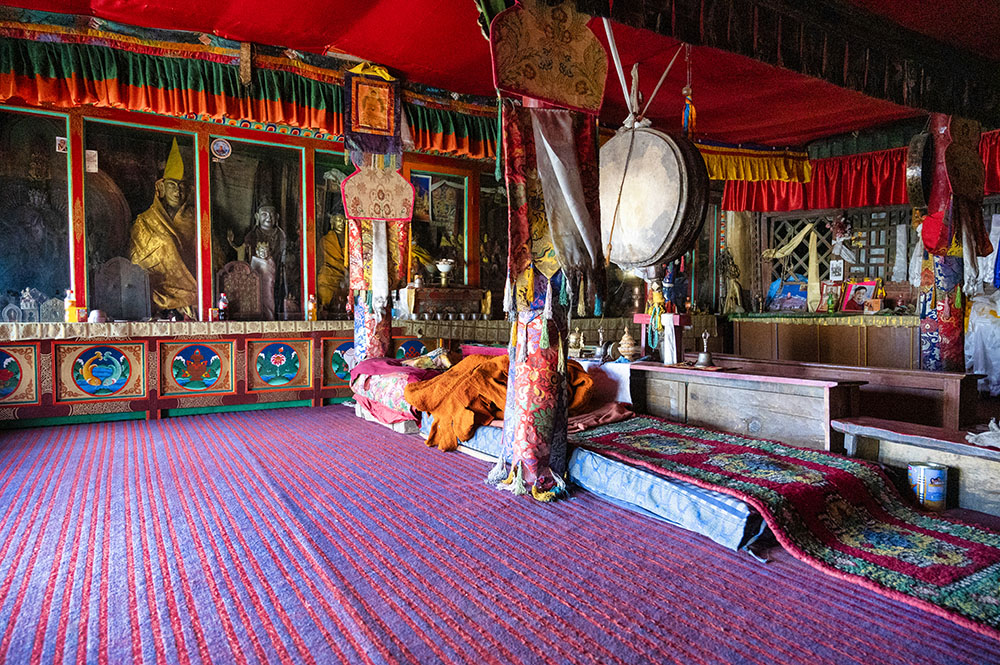
The term Tiger Nest Bhutan is often treated as a static monument. This oversimplification risks stripping the site of its operational complexity. It is not a museum or a viewing platform; it remains an active, functioning monastic institution. Misunderstandings arise from the assumption that the site exists to be “seen.” In truth, the monastery functions as a site of rigorous spirituallabourr. Tourists may enter specific zones. However, the interior reality of the life of the monks, the preservation of thangkas, and the daily rituals occur behind the scenes, governed by strict religious protocols.
The danger of this oversimplification is twofold. First, it diminishes the sanctity of the space, turning a pilgrimage site into a backdrop for documentation. Second, it masks the extreme environmental fragility of the cliffside location. The granite face is subject to seismic activity and weathering. It requires constant, non-invasive maintenance. When visitors prioritise mobility or photography over structural boundaries, they challenge the equilibrium between tourism and conservation. Recognising the monastery as a living entity is the first step toward responsible engagement.
Deep Contextual Background
Legend states that Padmasambhava, the second Buddha, flew to this site on the back of a tigress in the 8th century. This myth provides the foundation upon which the monastery rests. However, the current structure dates primarily to the 17th century, founded by Gyalse Tenzin Rabgye. By regulating access through mandatory guides and daily sustainable development fees, the Bhutanese government externalises the cost of site maintenance. This policy creates a buffer between the site’s intensity and the potential for mass-market exploitation. It allows the institution to maintain monastic quietude despite its global fame.
Conceptual Frameworks and Mental Models
-
The Inaccessibility-Protection Paradigm: This model recognises that the site’s historical difficulty is a primary factor in its survival. Physical barriers, such as the steep climb, act as natural filters for engagement.
-
The Liturgical-Spatial Model: This evaluates the site as a series of nested zones. It moves from public trails to semi-public spaces and finally to restricted sanctums. Understanding this hierarchy is essential for appropriate conduct.
-
The Seismic-Structural Equilibrium: This preservation model prioritises structural flexibility over rigidity. The monastery exists in synergy with the mountain. Maintenance efforts focus on moisture mitigation and localised stone stabilisation rather than comprehensive reconstruction.
-
The Tourist-Pilgrim Duality: This framework categorises human impact on the site. Pilgrims engage via ritual participation, while tourists engage via visual documentation. Management must balance these streams to ensure the pilgrim experience is not subsumed by tourist volume.
Key Categories and Operational Variations
Accessing the site requires an assessment of both the physical trail conditions and the specific administrative requirements set by the Paro district.
| Access Variation | Focus | Physical Demand | Administrative Requirement |
| Standard Trail | Full Ascent | High | Mandatory Licensed Guide |
| Cafeteria Viewpoint | Visual Observation | Moderate | Guide Recommended |
| Pilgrimage Extension | Site & Surrounds | Very High | Specialized Permitting |
| Seasonal Variation | Climatic/Temporal | Variable | Localised Safety Check |
Decision logic suggests that the “Standard Trail” experience is best undertaken during the shoulder seasons (spring and autumn) to mitigate the risks of extreme heat or sudden precipitation, which significantly alter trail safety.
Real-World Scenarios and Decision Logic
Consider the “Monsoon Precipitation” scenario. Frequent summer rainfall impacts the stability of the cliffside path. The decision logic for the guide and the visitor must prioritise site safety over schedule adherence. If the trail authority closes segments due to mudslides or structural instability, attempting to find alternative, “unauthorised” paths is not merely a violation of rules; it is an invitation to mechanical failure of the trail’s edge.
Planning, Cost, and Resource Dynamics
The economic management of visiting the site is tethered to Bhutan’s national tourism policy.
-
The Daily Sustainable Development Fee (SDF): This is the foundational cost, covering infrastructure, health, and environmental preservation. It is not an entry fee but a systemic investment.
-
Direct Costs: Beyond the SDF, these include guide hiring, private transit within the Paro valley, and localised lodging.
-
Opportunity Costs: Because access to the monastery is physically exhausting, visiting it effectively occupies an entire day, precluding other activities in the Paro region. Planning must reflect this temporal investment.
Tools, Strategies, and Support Systems
-
Guided Interface: The licensed guide is the primary support system for the visitor. They function as a translator of cultural norms, a safety monitor on the trail, and a conduit for administrative requirements.
-
Optics and Documentation: Given the strict photography limitations within the shrines, high-quality optics (binoculars) are a superior tool for observing the monastery’s architectural details from the trail.
-
Physical Conditioning: The altitude and vertical gain require physical preparation. Failure to prepare is the most common cause of a shortened or incomplete visit.
-
Local Knowledge: Engaging with the monastic staff via the guide for information on ritual schedules provides a much deeper experience than relying on standardised signage.
Risk Landscape and Failure Modes
The primary systemic risk is “Institutional Over-Exposure.” If the volume of visitors surpasses the monastery’s capacity to host them while maintaining its internal rhythms, the institution may move toward a more restrictive, purely visual experience. A second risk is “Environmental Degradation,” specifically the accumulation of litter and the erosion of the trail’s natural drainage, which could eventually compromise the cliff base. Compounding these is the “Authenticity Gap,” where the demand for an experience like that found at Tiger Nest Bhutan leads to a commodification of the ritual elements, potentially diluting the very culture being presented.
Governance, Maintenance, and Long-Term Adaptation
The institution operates under the stewardship of the Department of Culture and the local monastic body.
-
Adaptive Management Cycles: Following the 1998 fire, the monastery implemented rigorous fire-suppression technology integrated into the traditional design. Future adaptations must continue this balance between modern safety and traditional aesthetics.
-
Layered Checklist for Preservation: Monitoring programs must track seismic shifts in the granite wall, the health of the surrounding forest canopy, and the integrity of the monastery’s timber framing.
-
Trigger Points for Restriction: Management must have pre-defined thresholds for visitor density. If trail erosion rates exceed a certain percentage, access must be throttled regardless of current booking demand.
Measurement, Tracking, and Evaluation
-
Leading Indicators: The health of the forest trail path, the condition of the exterior masonry, and the level of adherence to photography restrictions.
-
Lagging Indicators: Long-term survey data on the monastery’s timber structural integrity and the qualitative reports from the monastic body regarding the compatibility of their religious practice with the visitor flow.
-
Documentation: The maintenance logs kept by the Department of Culture serve as the primary indicator of the site’s ongoing physical stabilisation.
Common Misconceptions and Oversimplifications
-
Myth: “The monastery can be visited without a guide.”
Correction: Strict regulations require a licensed Bhutanese guide for all visitors to the monastery site. -
Myth: “Photography is allowed everywhere.”
Correction: Photography is strictly prohibited within the interior of all shrines. -
Myth: “The climb is just a hike.”
Correction: The altitude (over 9,000 feet at the destination) adds a physiological dimension that makes the ascent more demanding than a standard trail hike. -
Myth: “The site is empty and silent.”
Correction: While quiet, the site is an active institution with ongoing prayer and monastic work. -
Myth: “Access is available 24/7.”
Correction: The site operates within set daily hours and may be closed for religious retreats or safety maintenance.
Ethical, Practical, and Contextual Considerations
The ethical observer acknowledges that their presence is an intrusion into a restricted space. The monastery was built to provide separation from the world; bringing the world to its doorstep requires a heightened level of awareness. Contextually, one must understand the monastery not merely as a symbol of Bhutan, but as a site of historical resistance, a place where the continuity of Vajrayana practice was secured during periods of immense change. When considering a visit to Tiger Nest Bhutan, one should recognize the weight of the privilege afforded by the Bhutanese tourism model.
Conclusion
Engaging with the site requires a transition from the posture of a collector intent on capturing the image to that of a witness, intent on understanding the institutional and spiritual endurance of the place. The monastery remains a living, breathing component of the Bhutanese landscape, not a static relic. By respecting the logistical requirements of the path, the liturgical sanctity of the shrines, and the administrative necessity of the guide, the visitor enters into a collaborative relationship with the monastery’s long-term preservation.
The ultimate goal of an encounter with Tiger Nest Bhutan is not the mere act of reaching the top, but the acknowledgement of the monastery’s place within a wider history of spiritual and physical equilibrium, a balance that remains as fragile as the cliff upon which it rests. It is this balance that defines the enduring legacy of Tiger Nest Bhutan as a pinnacle of human aspiration in the Himalayas.
Ultimately, Tiger Nest Bhutan persists as a beacon of cultural continuity precisely because it resists the total transparency of the modern age, maintaining its mystery through deliberate, protective inaccessibility. Any serious inquiry into the cultural foundations of the region must eventually return to the enduring gravity of Tiger Nest Bhutan.