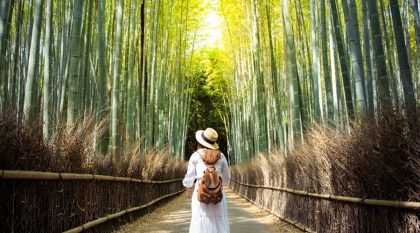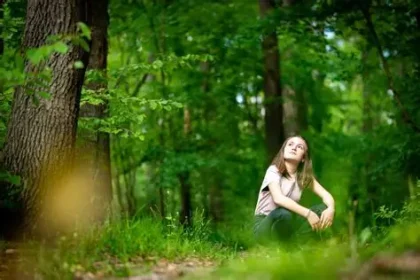
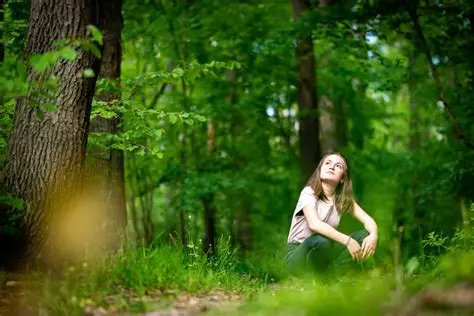
dirganews.com – The idea of walking slowly through a forest, attentive to subtle sensory changes, appears straightforward. However, in Japan, this practice, commonly translated as forest bathing, emerged not as a casual pastime but as a deliberate response to social, environmental, and physiological pressures. As a result, it occupies a space between recreation, public health, and cultural philosophy, shaped as much by institutional frameworks as by individual experience.
At a surface level, forest immersion suggests calm: filtered light, subdued sound, a retreat from urban intensity. Yet, beneath that simplicity lies a more intricate structure. Forests in Japan are rarely untouched ecosystems. Instead, they are layered environments managed, protected, and historically utilized where human presence has long coexisted with ecological processes. Therefore, moving through them with intention requires an understanding of those layers.
The modern interpretation of forest bathing often risks flattening this complexity. In many cases, it is reduced to a wellness trend, detached from its origins and stripped of its contextual depth. Consequently, such simplification obscures the factors that make the practice meaningful: the design of forest therapy bases, the role of government health initiatives, and the interplay between sensory engagement and environmental conditions.
Ultimately, to examine forest bathing in Japan as a system rather than a slogan is to look beyond its immediate appeal. It involves not only tracing its development but also identifying its variations and understanding how it functions across different landscapes and constraints. In this context, what follows is not a guide to relaxation, but a structured analysis of how this practice operates in real terms.
Understanding “forest bathing in Japan.”
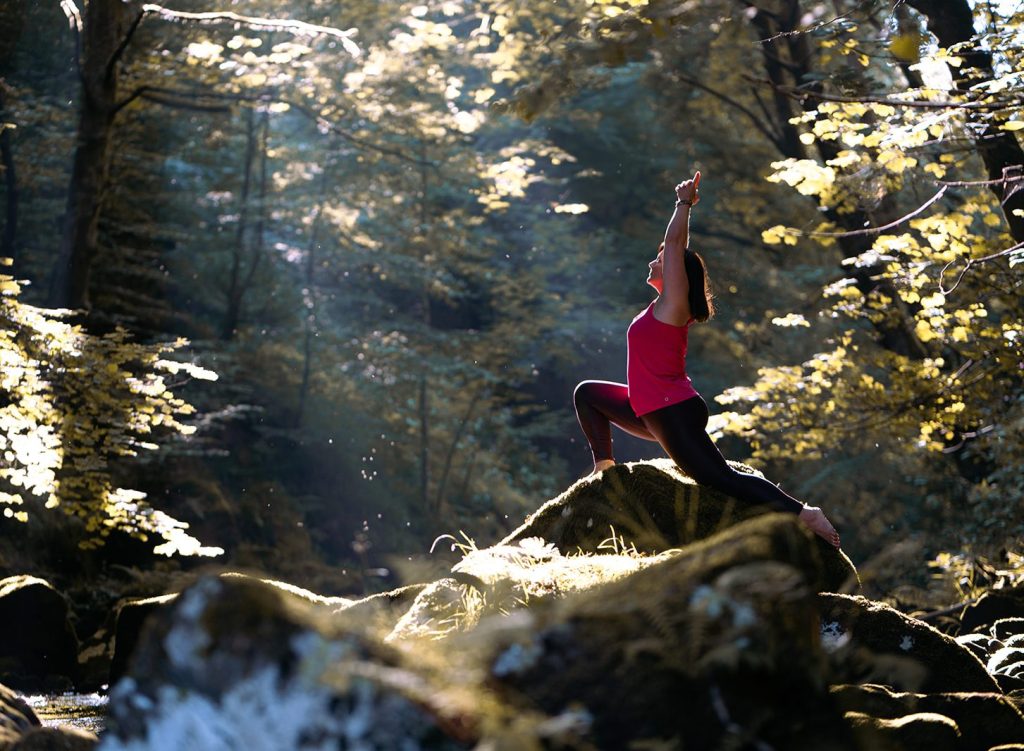
Forest bathing in Japan.
The phrase “forest bathing Japan” is widely used, yet its meaning shifts depending on context. At its core, it refers to the practice of spending time in forested environments with deliberate attention to sensory experience. However, this definition alone is insufficient, as it overlooks the structured frameworks within which the practice developed and continues to operate.
One common misunderstanding is equating forest bathing with hiking. While both involve movement through natural terrain, their objectives diverge. Hiking emphasizes distance, elevation, and physical exertion, whereas forest bathing prioritizes perception of sound, texture, and scent and often involves minimal physical strain. As a result, confusing the two can lead to mismatched expectations and, in some cases, inappropriate preparation.
Another simplification frames the practice as purely psychological. Although mental well-being is a component, forest bathing in Japan has been integrated into public health discourse, with studies examining physiological responses such as heart rate variability and stress hormone levels. Therefore, the experience is not only subjective but also measurable, though the interpretation of those measurements remains complex.
There is also a tendency to treat all forests as equivalent. In reality, different ecosystems such as the cedar forests of Yakushima or the mixed woodlands of Nagano Prefecture produce distinct sensory environments. Consequently, these differences influence the nature of the experience in ways that are not immediately obvious.
Ultimately, understanding forest bathing in Japan requires acknowledging these variations. It is not a single activity but a set of practices shaped by environment, intention, and institutional context.
Deep Contextual Background
The formalization of forest bathing in Japan dates to the 1980s, when the term shinrin-yoku was introduced by government agencies as part of a broader initiative to promote public health. Rapid urbanization and increasing workplace stress created demand for interventions that were accessible, non-invasive, and culturally resonant.
Forests, already embedded in Japanese cultural and spiritual life, provided a natural foundation. Historically, wooded areas were associated with Shinto practices, where natural features were considered sites of spiritual presence. This cultural familiarity made forests an intuitive setting for health-oriented programs.
Over time, the concept evolved from a general recommendation to spend time in nature to a more structured system. Designated “forest therapy bases” were established, with trails designed to facilitate slow movement and sensory engagement. Scientific research accompanied this development, examining the effects of forest environments on physiological markers.
Importantly, these forests were not untouched wilderness. Many had been shaped by centuries of forestry management. This fact complicates the notion of “natural healing,” introducing questions about what aspects of the environment contribute to observed benefits.
The contemporary practice exists at the intersection of tradition, science, and policy. It is neither purely cultural nor purely clinical. Its evolution reflects an ongoing attempt to reconcile these domains.
Conceptual Frameworks and Mental Models
Sensory Immersion Model
This framework views forest bathing as a process of amplifying sensory awareness, sound, smell, touch, and visual detail. The environment acts as a stimulus field, and the participant’s role is to engage with it attentively.
Limit: It may overlook the role of external factors such as crowding or environmental degradation.
Physiological Response Framework
Here, the focus is on measurable changes in the body, reduced stress markers, and improved cardiovascular indicators. The forest is treated as a variable influencing these outcomes.
Limit: Correlation does not always imply causation; individual responses vary.
Environmental Context Model
This approach emphasizes the specific characteristics of each forest—tree species, climate, terrain, and how they shape the experience.
Limit: It can complicate generalization across different locations.
Cultural Integration Lens
Forest bathing is understood within a broader cultural context, including historical relationships between people and nature.
Limit: Cultural significance may not translate uniformly across audiences.
Key Categories and Variations
1. Designated Forest Therapy Bases
Example: Akasawa Natural Recreational Forest
Structured trails, guided sessions, research-backed design.
2. Remote Old-Growth Forests
Example: Yakushima
Minimal infrastructure, high ecological complexity.
3. Urban-Adjacent Forest Parks
Example: Meiji Shrine Forest
Accessible, managed environments.
4. Mountain Forest Trails
Example: Kiso Valley
Blend of hiking and immersion.
5. Coastal Forest Ecosystems
Example: Noto Peninsula
Influenced by the maritime climate.
6. Seasonal Forest Experiences
Different forests exhibit distinct characteristics across seasons.
Comparison Table
| Category | Accessibility | Structure | Sensory Intensity | Variability |
|---|---|---|---|---|
| Therapy Bases | High | High | Moderate | Low |
| Old-Growth Forests | Low | Low | High | High |
| Urban Forests | High | High | Low-Moderate | Low |
| Mountain Trails | Moderate | Moderate | Moderate-High | High |
| Coastal Forests | Moderate | Moderate | Moderate | Moderate |
Decision Logic
Selecting a setting depends on balancing accessibility, desired immersion level, and tolerance for environmental variability. Structured environments reduce uncertainty but may limit the depth of experience.
Real-World Scenarios
Guided Session at a Therapy Base
Constraints: fixed schedule, group dynamics
Failure Mode: Over-structuring reduces personal engagement
Second-order effect: diminished perceived benefit
Independent Exploration in Old-Growth Forest
Constraints: navigation, weather
Failure Mode: disorientation
Second-order effect: stress counteracts intended relaxation
Urban Forest Visit
Constraints: noise, crowding
Failure Mode: insufficient immersion
Second-order effect: minimal physiological impact
Seasonal Transition Visit
Constraints: unpredictable weather
Failure Mode: misaligned expectations
Second-order effect: reduced engagement
Planning, Cost, and Resource Dynamics
| Category | Estimated Range (USD) |
|---|---|
| Transportation | $20–$200 |
| Entry/Program Fees | $0–$100 |
| Accommodation | $50–$300 |
| Equipment | $50–$300 |
Indirect costs include time allocation and the opportunity cost of travel.
Tools, Strategies, and Support Systems
- Guided program enrollment
- Weather monitoring
- Route familiarity
- Sensory awareness techniques
- Time management strategies
- Minimal gear preparation
Each tool shapes the experience but does not guarantee outcomes.
Risk Landscape and Failure Modes
Risks are generally low but not absent:
- Environmental (weather, terrain)
- Psychological (expectation mismatch)
- Logistical (access issues)
Failure often stems from misaligned expectations rather than external hazards.
Governance and Long-Term Adaptation
Forest therapy programs are monitored and updated based on research findings. Adaptation occurs through:
- Trail maintenance
- Program refinement
- Environmental conservation efforts
Measurement, Tracking, and Evaluation
Indicators
- Leading: engagement level, environmental conditions
- Lagging: perceived relaxation, physiological markers
Documentation
- Session logs
- Environmental notes
- Personal response tracking
Common Misconceptions and Oversimplifications
- Forest bathing is equivalent to hiking
- All forests provide the same benefits
- Results are immediate and universal
- No preparation is required
- It is purely psychological
- Structured programs are unnecessary
Ethical and Contextual Considerations
Sustainable use of forest environments is critical. Increased popularity can lead to overuse, requiring careful management to preserve ecological integrity.
Conclusion
Forest bathing in Japan represents a convergence of environment, culture, and health science. As such, it cannot be reduced to a simple activity or trend. Its effectiveness and meaning depend on the context, ecological, cultural, and individual.
Therefore, understanding that context allows for a more nuanced engagement, one that respects both the complexity of the environment and the variability of human response.