
dirganews.com – Modern tourism has undergone a structural transformation. It has shifted from a culture of discovery to one dominated by algorithmic visibility. This is not merely a change in consumer preference. It represents a digital feedback loop that rewards extreme visual accessibility. Places once valued for their historical, ecological, or cultural weight are now often reduced to stages for digital documentation. In Japan, this phenomenon has reached a critical juncture. The collision of record-breaking inbound visitor numbers and the nation’s delicate social fabric demands new analytical rigor from the traveler.
This transition creates tension between a location’s intrinsic value and its extrinsic performance metrics. Suddenly, massive exposure through social platforms alters the very characteristics that initially drove interest. Infrastructure, local economies, and geological integrity now face unanticipated stresses. As of 2026, the Japanese government’s Tourism Nation Promotion Basic Plan has entered its most critical phase. The focus has shifted sharply toward sustainability and the mitigation of negative externalities.
Understanding “Viral Travel Destinations Jepang”

travelingkejepang.com
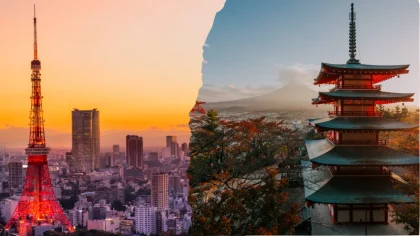
The term Viral Travel Destinations Japan is often used as a loose descriptor for any Japanese location experiencing a sudden spike in foot traffic. However, this definition obscures complex underlying mechanics. These are not merely popular places. They are manifestations of “popularity gravity,” where the volume of digital references creates an overwhelming pull. This pull often exists independent of the site’s actual capacity to host visitors or provide a sustained experience.
A common misunderstanding is the assumption that virality is an accidental byproduct of beauty. In reality, most high-visibility sites are subjects of deliberate curation. Whether through influencer partnerships, algorithmic amplification, or a concentration of photogenic features, these destinations are constructed to satisfy the demand for high-impact digital output. The oversimplification here is dangerous. It treats these sites as static objects, ignoring the destructive interaction between transient visitors and fixed infrastructure.
Deep Contextual Background: The Evolution of Global Visibility
The evolution of these sites follows three distinct phases: curated travel journalism, the digital review economy, and algorithmically driven discovery. Historically, travel in Japan was managed by institutions like guidebooks and writers. The digital review era democratized this, shifting power to aggregate opinions. Today, we are in the era of visual primacy, where the image is the primary gatekeeper.
Systemically, this has forced a “commodification of place.” To compete for attention, locations are incentivized to provide a singular, optimized visual “hook”—such as a shrine gate or a seasonal bloom. This evolution is linked to the globalization of leisure. The cost of mobility has dropped while the social capital of specific travel styles has risen. Consequently, destinations like Shirakawa-go or the Arashiyama Bamboo Forest are caught in a race to maintain visibility. Often, this occurs at the expense of their identity or ecological health.
Conceptual Frameworks and Mental Models
To analyze these locations, one must utilize models that account for the fluidity of modern attention.
-
The Saturation Threshold: Every site has a physical carrying capacity and an “attention capacity.” Once digital references cross a certain threshold, the visitor experience drops precipitously. Mastery lies in identifying the inverse relationship between saturation and qualitative value.
-
The Feedback Loop of Scarcity: Locations gain value through perceived exclusivity. Once they become viral, that scarcity vanishes, and the destination enters a phase of “commoditized accessibility.” This creates diminishing returns; the more accessible a destination becomes, the less it satisfies the initial, desire-driven motivation.
-
The Staged Reality Construct: Many viral sites are no longer “travel destinations” in the traditional sense. They are “studio environments” designed for a specific visual narrative. Understanding this requires shifting one’s view from “participating in a place” to “performing in a scene.”
Categorical Analysis of High-Visibility Sites
| Category | Typical Driver | Primary Trade-off |
| Monolithic Icons | Historic/Geological scale | Extremely high volume, high restriction |
| Aesthetic Enclaves | Photogenic urban pockets | Gentrification, loss of local authenticity |
| Ephemeral Phenomena | Seasonal biological/weather events | High risk of failure, logistical unpredictability |
| Artificial Fabrications | Purpose-built photo platforms | Lack of substance, rapid obsolescence |
Realistic Decision Logic
When evaluating whether to visit a high-visibility location in Japan, follow this protocol:
-
Capacity Analysis: Does the site offer tiered access or reservation systems? If not, the experience will be uniform and crowded.
-
Temporal Load: Is the virality tied to a time-limited event (e.g., peak cherry blossoms)? If so, the influx will be concentrated and uncontrollable.
-
Value-to-Effort Ratio: If the goal is a specific image, is the time required to secure that image often involving hours of queuing, commensurate with its long-term value?
Real-World Scenarios: Dynamics and Failure Modes
The “viral” phenomenon in Japan is not a uniform occurrence but a series of distinct, localized system failures triggered by an abrupt mismatch between site capacity and visitor volume. Examining these scenarios provides a necessary understanding of how the “popularity gravity” of specific locations manifests in the physical world.
The “Hero Shot” Congestion (Fujikawaguchiko)
-
The Dynamics: A high-traffic node gains viral status due to a specific photographic perspective. The rapid influx leads to mass jaywalking, blocking of public roads, and encroachment on private property.
-
Failure Mode: Local authorities were eventually forced to install physical barriers to obstruct the view entirely. This represents a “systemic reset”—where the demand for the site destroyed its own utility, resulting in a permanent loss of access for all visitors.
-
Second-Order Effects: Surrounding businesses, initially benefiting from the foot traffic, faced increased overhead due to security costs and regulatory pressure, leading to a fragmented and tense local community atmosphere.
The Cultural Etiquette Conflict (Gion, Kyoto)
Historic districts designed for residential and religious life are increasingly treated as “living museums.”
-
The Dynamics: Visitors, motivated by social media content featuring geishas and maikos, engage in aggressive photography that interrupts the professional activities of these cultural practitioners.
-
Failure Mode: The fundamental social contract between the site and its visitors breaks down. This has necessitated the implementation of “no-photo” zones and the legal restriction of access to private alleys, effectively criminalizing behavior that was previously considered standard tourism.
-
Second-Order Effects: The implementation of these restrictions increases the “policing” of tourist spaces, changing the atmosphere of the district from one of historical immersion to one of vigilant oversight.
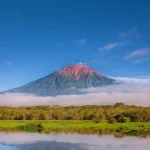
The “Bullet Trekking” Hazard (Mount Fuji)
The pursuit of the summit sunrise, driven by the need to capture a “once-in-a-lifetime” viral image, has created a severe safety crisis.
-
The Dynamics: Unprepared hikers attempt to summit in a single night, known as “bullet trekking,” to align their arrival with the optimal photographic conditions at dawn.
-
Failure Mode: A direct spike in accidents, altitude sickness, and physical exhaustion among visitors who lack the gear or physical training for the ascent.
-
Second-Order Effects: Authorities have been forced to implement strict trail quotas, entry fees for conservation, and mandatory closure times, transforming a previously accessible natural landmark into a highly controlled, high-friction environment.
Planning, Cost, and Resource Dynamics
| Resource Type | Variability | Strategy for Management |
| Logistical Overhead | Extreme | Rely on private, flexible transport or rail passes. |
| Time Investment | High | Always build in a 200% buffer for wait times at key nodes. |
| Financial Cost | Variable | Budget for “entry premiums” and site-specific conservation taxes. |
| Opportunity Cost | High | Weigh the value of a viral site against a lesser-known regional alternative. |
Tools and Strategic Systems for Navigation
-
Predictive Sentiment Monitoring: Tracking the velocity of content creation to gauge the decline of a site’s “quality.”
-
Capacity-Based Scheduling: Utilizing real-time data or official crowd-management trackers provided by local municipalities.
-
Local-Network Engagement: Developing relationships with local providers (ryokan hosts, regional guides) who offer insights into true site conditions.
-
Buffer-Time Planning: Integrating mandatory “downtime” into schedules to mitigate the extreme fatigue associated with high-traffic urban exploration.
The Risk Landscape: A Taxonomy of Compounding Failures
The primary failure mode is the Congestion Cascade. When infrastructure is optimized for a certain capacity, a sudden surge in visitors creates a chain reaction: parking stalls block arteries, waste removal fails, and public transport becomes unusable for residents. Compounding this is the Expectation Gap: the discrepancy between the polished, filtered digital image and the reality of a crowded, often noisy, and degraded environment.
Governance, Maintenance, and Long-Term Adaptation

wallpaperaccess.com
The rapid transition of diverse locations into Viral Travel Destinations jepang has forced a fundamental shift in how the country approaches site management. It is no longer sufficient to treat a temple, a mountain path, or a historic village as a static artifact; they must now be managed as dynamic, high-pressure infrastructure. This necessitates a proactive governance model that balances the economic benefits of tourism with the preservation of cultural integrity and public order.
The Shift to Proactive Stewardship
Governance is moving away from purely promotional activities toward a model of “capacity management.” The Japanese government, in coordination with local municipalities and heritage organizations, has begun to implement tiered access strategies. This includes:
-
Dynamic Pricing: Utilizing entry fees that scale based on demand to discourage overcrowding during peak hours.
-
Permit-Based Access: Moving from open-access to reservation-only systems for sensitive natural sites to manage human impact on fragile ecosystems.
-
Infrastructure Hardening: Reinforcing public pathways, installing surveillance, and formalizing signage to prevent the erosion caused by unsanctioned foot traffic.
Monitoring and Review Cycles
Effective maintenance is dictated by the ability of local authorities to measure and react to site health. This involves a layered checklist of performance indicators:
-
Safety and Compliance: Monitoring the frequency of infractions (e.g., jaywalking, littering, restricted area entry).
-
Infrastructure Longevity: Conducting structural audits of historic wood and stone features subjected to higher-than-normal mechanical wear.
-
Community Sentiment: Regularly surveying residents—who are the primary stakeholders—to ensure tourism has not become an unbearable social burden.
Measurement, Tracking, and Evaluation
-
Leading Indicators: Changes in the velocity of hashtags, local property value shifts, and the proliferation of “influencer-friendly” commercial infrastructure.
-
Qualitative Signals: Changes in local community sentiment (documented in local media) and the degradation of natural or historic features.
-
Quantitative Metrics: Throughput capacity per hour, waste volume, and maintenance cost-to-revenue ratios at specific nodes.
Common Misconceptions and Oversimplifications
-
“Virality equals quality”: Often, the opposite is true; the most “viral” sites are those most easily reduced to a single, high-contrast, easily consumable image.
-
“Crowds are unavoidable”: They are often manageable if one is willing to abandon the “hero shot” and visit secondary locations with similar cultural resonance.
-
“Local tourism always benefits”: The economic benefits are often highly concentrated in specific, externally owned businesses, while social costs are borne by the community.
-
“The Japan Rail Pass solves everything”: While convenient, it does not alleviate the localized friction of getting to and from specific, overcrowded rural nodes.
Conclusion
The study of these destinations is, ultimately, the study of how human attention transforms the physical world. True travel requires the ability to look past the algorithmic framing, to assess the systemic health of a destination, and to exercise the judgment to decide when a site is best left to its own quietude.
Engagement with the Japanese landscape should be guided by a respect for both the history of the place and its future utility, ensuring that visitors remain observers of the world rather than catalysts for its degradation. The future of exploration in Japan lies not in the pursuit of the viral but in the deliberate selection of the significant, ensuring that both the visitor and the landscape can persist in a state of mutual respect. Success in this environment is defined by adaptability, preparation, and the intellectual humility to recognize that not every location requires, or benefits from, our physical presence.