dirganews.com – The Indonesian landscape, defined by its extreme topography and diverse climatic zones, provides a unique canvas for the evolution of luxury outdoor hospitality. The transition from traditional camping, often characterized by logistical complexity and minimal comfort,t to the structured, design-led phenomenon of glamping represents a significant shift in how the modern traveler engages with remote environments. This is not merely a trend toward elevated amenities; it is a systemic change in the infrastructure of leisure, where the boundary between architecture and the natural world is purposefully blurred to create a controlled encounter with wilderness.
As of 2026, the proliferation of these sites across the archipelago, from the volcanic highlands of West Java to the remote coastal edges of Sumba, has created a complex market. The challenge for the discerning traveler is to distinguish between sites that merely apply a tent-like aesthetic to existing hospitality models and those that fundamentally integrate their physical structure into the surrounding ecosystem. This distinction is critical, as the long-term viability of these environments depends on the balance between human occupancy and ecological preservation.
Understanding “Best Glamping Indonesia.”
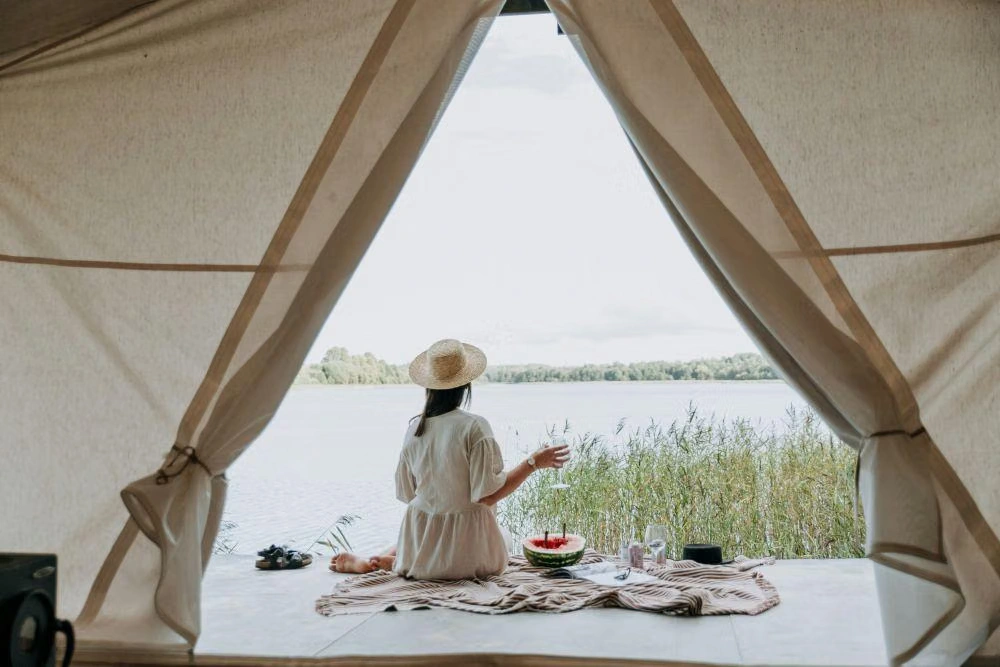
Best Glamping Indonesia.
The concept of the Best Glamping Indonesia is frequently oversimplified in contemporary discourse, often reduced to a list of photogenic locations. This reductionism ignores the multi-dimensional nature of the experience. To properly define the “best” in this sector, one must look at the convergence of three pillars: structural integrity, ecological integration, and operational service levels. It is a mistake to view these properties as static accommodations; they are, in fact, complex, reactive systems that must manage the impact of human presence within vulnerable environmental buffers.
Common misunderstandings arise from conflating “luxury” with “conspicuous consumption.” The most effective sites are not necessarily those with the most opulent furnishings, but those that achieve a profound sense of place. A true leader in the field recognizes that the primary commodity is the environment itself. Therefore, the architectural approach should favor lightweight structures that minimize soil compaction and maximize passive ventilation.
The risk of this sector’s rapid expansion is the potential for “visual saturation,” where properties prioritize the aesthetics of the “Instagrammable tent” over the substance of the guest experience. An informed observer must look past the surface design to the functional reality: how is water managed? How is waste mitigated? Does the design enhance the landscape, or does it merely occupy it? Identifying the best options requires this level of analytical scrutiny.
Deep Contextual Background: The Evolution of Outdoor Leisure
The history of outdoor hospitality in Indonesia has historically been dominated by two extremes: the rugged, gear-intensive expeditions of mountaineers and the highly contained, walled-in experiences of luxury resorts. The rise of modern glamping is, in essence, a synthesis of these two traditions. It adopts the accessibility and comfort of the resort model while utilizing the spatial and aesthetic language of the expedition.
Historically, this evolution was inhibited by infrastructure limitations, specifically regarding water, sanitation, and off-grid electricity. However, the maturation of solar energy, water filtration, and modular, prefabricated design has allowed developers to operate in previously inaccessible regions. This has shifted the economic model of Indonesian tourism from a “centralized resort” focus to a “distributed wilderness” focus, where the hotel is no longer a massive building, but a series of distinct, low-impact nodes. This decentralization has created new opportunities for rural economic integration, but it has also placed unprecedented pressure on local landscapes that were once insulated from mass transit.
Conceptual Frameworks: The Geometry of Comfort and Isolation
Navigating the landscape of outdoor hospitality requires mental models that account for the variables of climate, physical access, and isolation.
-
The Comfort-Ecological Paradox: There is a baseline energy cost required to sustain “luxury” (e.g., climate control, hot water) in a wilderness setting. The most advanced sites are those that utilize passive architecture to minimize this energy cost. The best glamping properties are defined by their ability to provide comfort while maintaining a near-zero thermal or physical footprint.
-
The Accessibility-Exclusivity Axis: Total isolation is rarely compatible with service-heavy hospitality. A high-quality experience often requires a degree of infrastructure that inevitably reduces the feeling of “wildness.” Mastery involves identifying the “Goldilocks zone”—the threshold where the degree of isolation provides psychological relief without compromising the logistical reliability of the experience.
-
The Climate-Responsive Structure: Indonesian climates range from the cool, misty highlands of the Dieng Plateau to the searing, humid coastal zones. A property that is considered excellent in one climate may be functionally inadequate in another. A “best” designation must be climate-specific, acknowledging that structure and material choices must respond to local humidity, wind patterns, and diurnal temperature shifts.
Categorical Analysis of High-End Outdoor Hospitality
| Category | Primary Feature | Primary Trade-off | Ideal Utility |
| Highland Canopy Sites | Dramatic view-sheds | High moisture/cold management | Reflective, slow-paced retreats |
| Coastal/Tidal Enclaves | Direct environmental access | High maintenance/corrosion risk | Seasonal, weather-dependent visits |
| Forest/Jungle Pods | Deep immersion, canopy access | High insect/biological density | Deep solitude, bio-observation |
| Managed Agro-Sites | Culturally curated, accessible | Limited sense of “wildness” | Short-duration, family-oriented |
Realistic Decision Logic
When evaluating a property, apply this protocol:
-
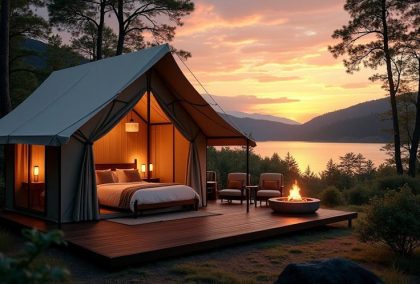
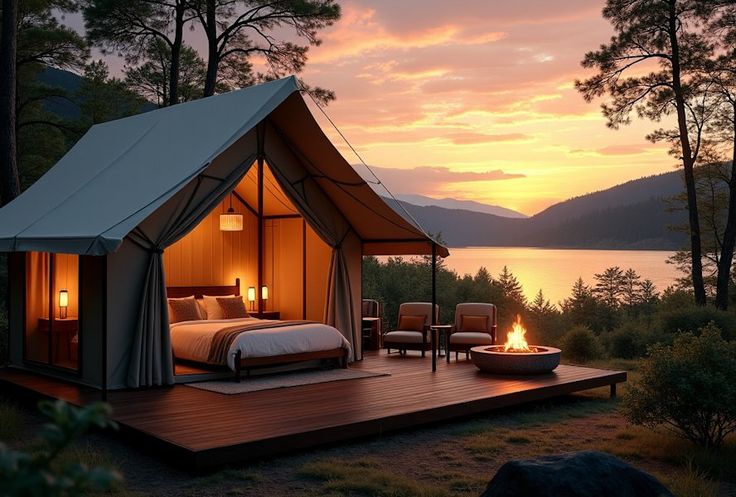
Site Topology: Is the tent positioned on a flat, artificially leveled pad, or does it utilize elevated decking to preserve the ground? The latter is indicative of higher-quality stewardship.
-
Service Density: Is the staff-to-guest ratio manageable? An overly complex service model in a remote area often leads to higher waste production and operational stress.
-
Structural Philosophy: Are the materials temporary and low-impact, or are they effectively permanent concrete structures disguised as tents? True outdoor hospitality prioritizes reversibility.
Real-World Scenarios: Operational Dynamics and Failure Modes
The Highland Humidity Crisis
A property in a mist-heavy region fails to implement effective humidity control. The failure mode is the rapid accumulation of mold within the tent fabric, leading to a degraded guest experience.
The Energy Grid Collapse
A property relies on a singular, undersized solar battery bank. A string of three overcast days results in a complete loss of power, water pumping, and climate control. The second-order effect is a forced, often ungraceful, evacuation of guests. The failure mode here is a lack of redundant, non-solar power backups (e.g., small-scale hydroelectric or high-efficiency generators).
Planning, Cost, and Resource Dynamics
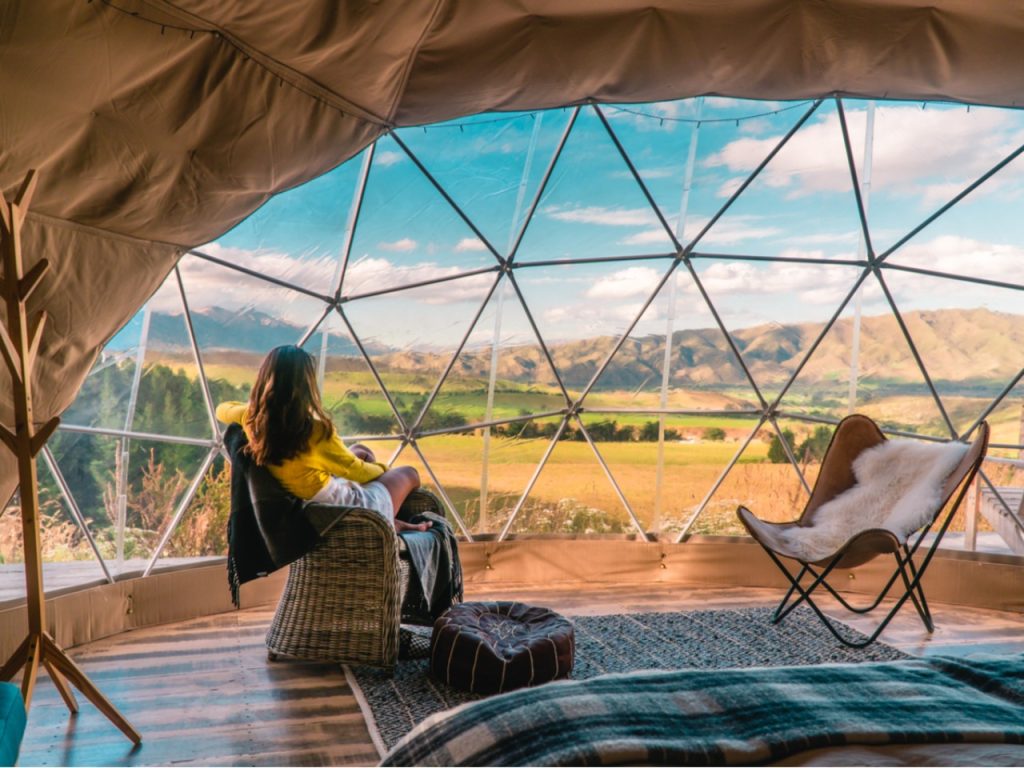
Best Glamping Indonesia.
The economic structure of premium outdoor hospitality is inherently variable, reflecting the high costs of logistics in remote regions.
| Resource Type | Variability | Management Strategy |
| Logistics/Transit | Extreme | Integrate transit into the booking; avoid “do-it-yourself” final-mile transport. |
| Maintenance/Servicing | High | Expect higher premiums for sites that invest in regular environmental auditing. |
| Environmental Cost | Variable | Prioritize sites that disclose their waste management and water recycling processes. |
| Time Buffer | Moderate | Always account for local weather-induced delays in remote high-altitude zones. |
Tools, Strategies, and Support Systems
Navigating the Indonesian landscape for high-end outdoor hospitality requires a shift from consumer-grade convenience to operational-grade awareness. The following tools and systems are essential for evaluating, selecting, and engaging with properties that operate at the intersection of luxury and wilderness.
1. Micro-Climatic and Topographic Data Modeling
Standard weather forecasts are insufficient for high-altitude or remote coastal sites. Before finalizing a booking, utilize advanced meteorological tools (such as high-resolution topographic modeling or specialized regional climate databases) to understand the micro-climatic reality. A property located at 1,500 meters in a valley may experience significantly higher rainfall and lower thermal stability than a site on an exposed ridge only two kilometers away. Understanding these nuances is critical for managing expectations regarding comfort and outdoor accessibility.
2. Operational Resilience Assessment
The mark of a sophisticated property is its ability to maintain service during environmental volatility. When researching a site, look for evidence of redundant systems:
-
Energy Redundancy: Does the property rely solely on solar, or is there a secondary, high-efficiency backup (e.g., hydroelectric or silent-run battery arrays)?
-
Water Management: Does the property have a dedicated, closed-loop filtration system, or is it dependent on external supply lines that are vulnerable to road or weather interruptions?
-
Communication Backup: Remote sites often lack stable cellular connectivity. An established property will have redundant satellite-based communication for both guest safety and operational monitoring.
3. Structural Integrity Audits
Visual documentation provided by properties often prioritizes the “hero shot” over structural reality. The discerning traveler should scrutinize imagery for functional engineering:
-
Elevated Flooring Systems: Look for structures built on raised, low-impact decking. Sites that directly anchor structures into the soil are often prone to moisture retention, insect infiltration, and long-term ground degradation.
-
Materiality and Durability: Evaluate the choice of materials. Is the tentage constructed from high-tensile, mold-resistant technical fabrics, or is it decorative, single-season canvas? The latter is a primary indicator of a property designed for short-term visual impact rather than long-term resilience.
4. Waste Management Transparency Inquiries
A core strategy for responsible engagement is the direct inquiry into sanitation. A high-quality operator will be prepared to explain their waste hierarchy:
-
Black-Water Treatment: Is there a certified septic or bio-digester system in place?
-
Grey-Water Cycling: Is grey-water filtered and redirected for irrigation or evaporation, or is it discharged into the local watershed?
-
Solid Waste Export: Does the site have a formal protocol for exporting non-biodegradable waste, or is it relying on primitive methods like on-site incineration or burial?
5. Local-Supply Chain Verification
The most resilient properties are those that have built deep, mutually beneficial relationships with local micro-economies. A property that sources its food, maintenance labor, and logistical support from within a 20-kilometer radius is far more capable of handling operational disruptions than one that relies on complex, long-distance supply chains. Supporting these sites directly contributes to the socio-economic stability of the region, which in turn protects the environment the property inhabits.
The Risk Landscape: A Taxonomy of Compounding Failures
The risk profile of these properties is dominated by the Infrastructure-to-Environment Mismatch. When an owner attempts to force a luxury hotel model into an environment that cannot support high energy or water consumption, the result is a system that inevitably breaks down.
-
Biological Risks: A property that does not properly manage its immediate surroundings will see a spike in pest density. Effective control requires ecological management, not just chemical pesticides.
-
Climate Volatility: Increasing weather unpredictability in the tropics means that permanent structures are often better than canvas, yet they lose the “camping” feel. The ideal balance is the high-strength, semi-permanent tent structure.
-
Regulatory Fragility: Many sites operate in legal gray areas regarding land usage. A collapse in local permitting can result in sudden, unexpected property closures.
Governance, Maintenance, and Long-Term Adaptation
The stewardship of these properties must evolve from passive management to active environmental engineering. Maintenance is not about cleaning; it is about site restoration.
-
Review Cycles: Properties should undergo annual ecological audits, checking for soil compaction, plant regrowth rates, and the efficacy of water treatment systems.
-
Trigger Adjustments: If soil erosion occurs around a viewing deck, immediate construction of terracing or re-vegetation is required.
-
Layered Checklist: Every property should follow a checklist: (1) Does the site produce more waste than it can process on-site? (2) Is the energy usage currently sustainable?
Measurement, Tracking, and Evaluation
Evaluation must move beyond “customer satisfaction” into the realm of Operational Impact Metrics.
-
Leading Indicators: The rate of indigenous plant regrowth around the structures; the consistency of water flow in local water systems.
-
Lagging Indicators: Total energy consumption per guest night; volume of solid waste exported from the site per month.
-
Documentation: Sites that provide transparent, publicly available impact reports are demonstrating a level of accountability that separates the industry leaders from the opportunistic operators.
Common Misconceptions and Oversimplifications
The rapidly evolving landscape of high-end outdoor hospitality in Indonesia is frequently misunderstood by both developers and consumers. These misconceptions often lead to poor investment choices, frustrated guest expectations, and, most critically, negative environmental impacts. Addressing these myths is essential for establishing a mature understanding of what constitutes a truly sustainable and high-quality wilderness experience.
1. “Canvas Is Inherently More Ecological”
There is a widespread belief that canvas tents are automatically more environmentally friendly than semi-permanent structures. In the high-humidity, high-precipitation environments of the Indonesian archipelago, untreated or low-quality canvas quickly becomes a biological liability, accumulating mold and mildew that requires harsh chemical interventions to remediate. Conversely, high-durability, engineered synthetic fabrics often provide a longer lifecycle and lower maintenance requirements, which can result in a lower total environmental footprint over time.
2. “Off-Grid Equals Low Environmental Impact”
A site is often marketed as “off-grid” to imply minimal environmental interaction. However, if an off-grid property relies on large, inefficient fossil-fuel generators to power intensive climate control systems, its carbon footprint may significantly exceed that of a property connected to a centralized, renewable-heavy municipal grid. True sustainability is measured by the total energy intensity of the site, not just the source of the power.
3. “Higher Pricing Correlates to Better Stewardship”
The market often equates high nightly rates with a premium on environmental stewardship. In practice, pricing is frequently tied to brand positioning, aesthetic curation, and marketing reach. One must look beyond the room rate to the operational systems supporting the guest.
4. “Wilderness Hospitality Should Be Entirely Primitive”
Conversely, there is an assumption that a site must be “primitive” to be authentic. This oversimplification leads to properties that lack basic, essential infrastructure, resulting in guests who are forced to bring excessive gear or generate more waste than a properly equipped site would require. A well-designed site provides essential services in a way that is invisible and efficient.
5. “Every Natural Location Is Suitable for Development”
Some operators operate under the fallacy that any scenic overlook or forest clearing is an ideal candidate for development. Certain landscapes, such as high-altitude peatlands or coastal mangrove buffers, are inherently ill-suited for the structural and waste-management demands of hospitality. The “best” sites are those that recognize when a landscape should be left entirely untouched.
Conclusion
The search for the best outdoor hospitality experience in Indonesia is a search for balance. It is an inquiry into whether we can inhabit the wild without consuming it. The properties that set the standard are those that view the tent not as an object, but as a temporary, light-touch intervention in a vast, complex ecosystem. As the sector matures, the metric of quality will shift from the presence of amenities to the absence of interference.
For the traveler, the imperative is to move beyond the aesthetic. By looking at the systems of water, energy, and waste that allow a site to exist, one can participate in a form of luxury that is regenerative rather than extractive. The ultimate luxury in this context is the awareness that one’s presence has allowed the wilderness to remain, fundamentally, what it was before we arrived.